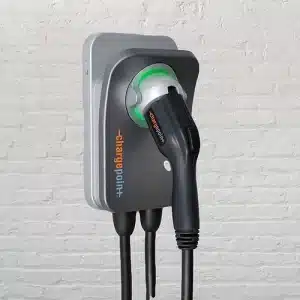
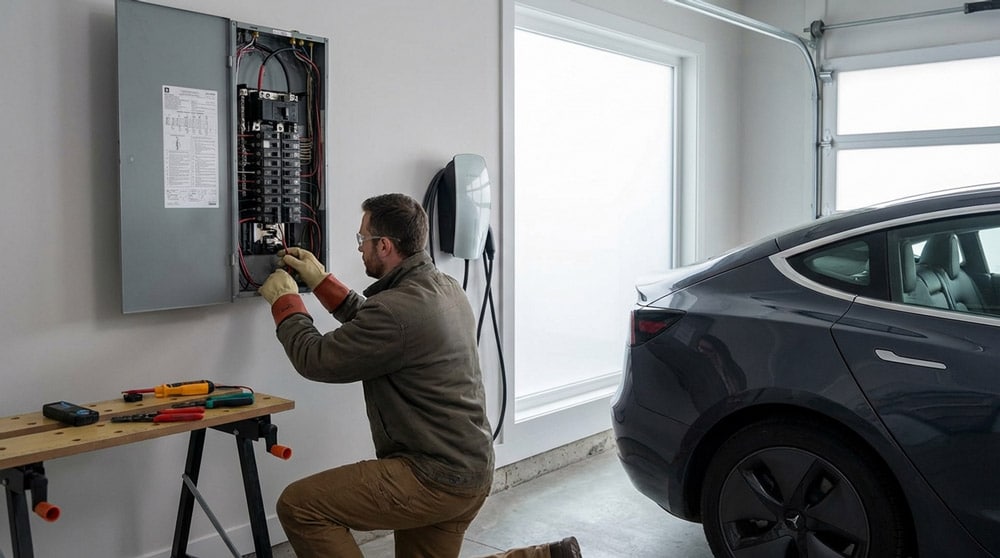
Do I need a panel upgrade for an EV charger? This is one of the first questions homeowners ask after buying an electric vehicle or planning to install a home charging station. Charging at home is convenient, affordable, and far more practical than relying on public chargers. But the electrical system in your home must be able to support the additional demand.
An EV charger, particularly a Level 2 charger, draws a substantial amount of electricity for several hours at a time. If your electrical panel is already near its limit, adding a charger could overload the system and cause breaker trips or safety risks.
The key factor is whether your current panel has enough available capacity. In many modern homes the answer is yes. In older homes, however, installing an EV charger often requires an electrical panel upgrade to safely handle the new load. Understanding how panels work and how electricians evaluate capacity will help you determine whether your home is ready for EV charging.
How EV Chargers Impact Your Home’s Electrical Capacity
Electric vehicles rely on a steady flow of electricity while charging. Unlike a microwave or coffee maker that runs briefly, an EV charger can operate for several hours continuously. This long-duration electrical load places additional demand on your home’s service panel.
Level 1 chargers use a standard 120‑volt outlet and draw relatively little power, which means most homes can support them without any electrical changes. The downside is charging speed. A full charge may take more than a full day.
Level 2 chargers are what most homeowners prefer. They operate on a 240‑volt circuit and deliver much faster charging speeds. However, this higher power output means the electrical panel must have sufficient capacity to handle the extra load without exceeding safe limits.
Because of this difference, electricians almost always evaluate the electrical panel before installing a Level 2 EV charger.
Signs Your Electrical Panel Might Not Support an EV Charger
Some homes show clear warning signs that the electrical system may already be under strain. If you notice these issues, an electrician may recommend a panel upgrade before installing an EV charger.
- Circuit breakers trip when multiple appliances run at the same time
- Lights dim or flicker when large appliances turn on
- The electrical panel is rated below 100 amps
- The panel is completely full with no room for new breakers
- The home still uses a fuse box instead of a breaker panel
- Major electrical upgrades have been added over the years
These indicators suggest your electrical system may already be operating near capacity. Adding an EV charger could push it beyond safe limits.
Common Electrical Panel Sizes in Homes
Homes are built with different electrical service capacities depending on the era they were constructed and the expected power usage at that time.
| Panel Capacity | Typical Home Age | EV Charger Compatibility |
| 60 Amp | Very old homes (pre‑1960) | Usually insufficient |
| 100 Amp | Older homes | Sometimes possible |
| 150 Amp | Mid‑range capacity | Often adequate |
| 200 Amp | Modern homes | Ideal for EV chargers |
A 200‑amp electrical panel is considered the modern standard and usually provides enough capacity for EV charging along with typical household appliances.
However, the panel size alone does not determine compatibility. What matters most is the amount of unused capacity after calculating all existing electrical loads.
What an Electrical Load Calculation Actually Evaluates
Before deciding whether you need a panel upgrade, electricians perform a detailed load calculation. This analysis estimates the maximum electricity your home may require when multiple systems operate at the same time.
Several elements influence the calculation:
- Total square footage of the home
- Number of kitchen appliances
- Electric ovens and dryers
- HVAC or heat pump systems
- Electric water heaters
- Existing high‑power devices such as hot tubs
- The expected amperage of the EV charger
The goal is to determine whether the electrical panel still has safe capacity available. If the calculated demand approaches or exceeds the panel rating, upgrading the panel becomes the safest option.
When a Panel Upgrade Is Usually Recommended
Not every home needs a panel upgrade, but certain situations make one very likely.
Older electrical systems were designed for a completely different era of electricity use. Decades ago, homes did not have electric vehicles, high-powered HVAC systems, or multiple large appliances running simultaneously.
Because of that, upgrading the panel is commonly recommended when:
- The home has a 100‑amp service or smaller
- The panel is over 25 years old
- There is no physical space for new breakers
- The property already runs several high‑demand appliances
- The homeowner plans to install multiple EV chargers
In these cases, upgrading the electrical panel does more than support EV charging. It modernizes the entire electrical infrastructure of the home.
Typical Costs of an Electrical Panel Upgrade
Homeowners often ask about the cost of upgrading their electrical panel before installing an EV charger. The total price varies depending on the service size, wiring conditions, and local permit requirements.
| Upgrade Type | Typical Cost Range |
| 100A to 200A panel upgrade | 2,000–2,000 – 2,000–5,000 |
| Electrical service upgrade | 1,500–1,500 – 1,500–4,000 |
| Panel relocation | 1,000–1,000 – 1,000–3,000 extra |
Costs can vary by region and property layout. Homes requiring additional wiring work or utility coordination may fall toward the higher end of these ranges.
While it represents an upfront investment, upgrading the panel significantly improves the safety and functionality of the home’s electrical system.
Alternatives That May Avoid a Full Panel Upgrade
In some situations, electricians can install an EV charger without replacing the entire electrical panel. The feasibility depends on how close the panel is to its maximum capacity.
Possible alternatives include:
- Installing a lower‑amperage EV charger
- Using smart load management systems
- Scheduling charging during off‑peak hours
- Adding a subpanel to organize circuits
These solutions help manage electrical demand more efficiently. However, they only work when the existing electrical service still has some available capacity.
If the main panel is already overloaded, upgrading remains the safest and most reliable solution.
Long-Term Advantages of Upgrading Your Electrical Panel
Upgrading your electrical panel does more than make room for an EV charger. It prepares your home for future electrical demands that are becoming increasingly common.
A higher‑capacity panel improves overall electrical safety by reducing the likelihood of overloaded circuits. Older panels sometimes struggle with modern power demands, especially in homes that have undergone multiple renovations.
Another advantage is flexibility. With a modern 200‑amp panel, homeowners can add new technologies without worrying about electrical limitations. These may include heat pumps, induction ranges, home batteries, or solar systems.
Finally, an upgraded electrical system can make a property more attractive to buyers. As electric vehicles become more common, homes that are already equipped for EV charging gain an advantage in the real estate market.
How Electricians Determine the Right Installation Approach
When evaluating whether you need a panel upgrade for an EV charger, electricians follow a systematic process. Each step ensures the installation meets safety standards and electrical codes.
The evaluation typically includes:
- Inspecting the main service panel rating
- Checking available breaker slots
- Measuring current electrical usage
- Performing a load calculation
- Reviewing EV charger specifications
After reviewing these factors, the electrician recommends the safest option. Sometimes the existing panel can handle the charger without modification. In other cases, upgrading the panel ensures reliable EV charging and long‑term electrical safety.
Conclusion
So, do you need a panel upgrade for an EV charger? The answer depends on your home’s electrical capacity, the size of your service panel, and how much electricity your household already uses.
Many modern homes with 200‑amp electrical panels can install a Level 2 EV charger without major electrical upgrades. Older homes with 100‑amp panels, limited breaker space, or aging electrical systems may require a panel upgrade to safely support EV charging.
The best way to determine the right solution is to have a licensed electrician perform a professional load calculation and inspect your electrical panel. This ensures your EV charger operates safely, efficiently, and in compliance with electrical codes.
As electric vehicles continue to grow in popularity, preparing your home’s electrical system today can make charging simpler, safer, and more convenient for years to come.