Electrical Load Calculation Langley: 7 Best Tips Homeowners Need to Know
If you are planning a panel upgrade, adding a Level 2 EV charger, or installing a hot tub, you have probably heard your electrician mention an electrical load calculation Langley homeowners are now required to get before major work begins. This single step decides whether your existing service can safely handle new demand, or whether an upgrade comes first. Skipping it risks tripped breakers, overheated wiring, and failed inspections.
In this guide, we break down what a load calculation actually measures, when you need one, how EV chargers and 200-amp services factor in, and how a certified electrician approaches the process in Langley, BC. By the end, you will know exactly what to ask for and why it protects your home.
This guide was put together using current BC Electrical Code rules and Technical Safety BC bulletins, along with what our licensed electricians see day to day while performing electrical load calculation Langley projects for local homeowners.
1. What Is an Electrical Load Calculation?
A home electrical load calculation is a formal process, governed by the Canadian Electrical Code and the BC Electrical Code, that adds up every circuit, appliance, and demand factor in your house to determine the total amperage your electrical service must be able to safely deliver. It is not a rough guess. A licensed electrician measures the square footage of your living space, tallies your major appliances (range, dryer, water heater, HVAC equipment), and applies demand factors set out in Table 14 and Rule 8-106 of the code, since not every device runs at full draw simultaneously.
The result is a number, expressed in amps, that tells you and your utility whether your current 100-amp, 125-amp, or 200-amp service has room for additional load, or whether it is already near capacity. This is the foundation of any electrical load calculation Langley homeowners rely on before adding new equipment.
2. Why Electrical Load Calculation Matters in Langley, BC
Langley has seen rapid growth in new construction, secondary suites, and EV adoption over the past several years, and much of the existing housing stock still runs on older 100-amp services installed decades ago. An electrical load calculation BC electricians perform today accounts for present-day realities: heat pumps, induction ranges, EV chargers, and hot tubs that simply did not exist when many Langley homes were originally wired.
Local building departments in the Township of Langley and the City of Langley require documented load calculations before issuing permits for service upgrades, secondary suites, and certain large appliance installations. Without one, your permit application can be rejected outright, delaying your project by weeks. This is why an accurate electrical load calculation BC-compliant homeowners can present to inspectors is not optional paperwork; it is the backbone of a safe, code-compliant electrical system.
Many neighbourhoods in Langley, from established areas near Fort Langley to newer developments in Willoughby, still have services installed 20 to 40 years ago. Back then, homes rarely ran central air conditioning, an EV charger, and an induction range at the same time. Today they often do, and that shift is exactly why an up-to-date electrical load calculation BC homeowners request now looks so different from what may have been on file when the house was built. A calculation done a decade ago, before your last renovation or appliance swap, should not be assumed accurate today.
The Regulatory Framework Behind Every Calculation
Technical Safety BC oversees electrical safety across the province and publishes detailed guidance electricians must follow. One of the most referenced documents explains how additional loads, such as a hot tub or an electric vehicle charger, can be added to the existing service of a single dwelling. For homeowners who want the full technical detail behind the numbers your electrician will show you, Technical Safety BC’s demand factors and use of Rule 8-106 for single dwellings bulletin is the authoritative source electricians across BC rely on.
3. Do I Need a Load Calculation? 5 Signs You Do
Homeowners often ask us, “do I need a load calculation for a project this small?” The honest answer depends on what you are adding to your home. If any of the following apply to your situation, the answer to do I need a load calculation is almost certainly yes:
- You are installing a Level 2 EV charger and your panel is already close to full
- You are upgrading from a 100-amp to a 200 amp service and need documentation for the utility and permit office
- You are adding a hot tub, sauna, or driveway heating system that draws significant continuous current
- You are finishing a basement, building a secondary suite, or adding a laneway home
- Your breakers trip regularly, lights dim when large appliances start, or your panel is more than 25 years old
If you recognize even one of these signs, don’t guess. Ask a licensed electrician whether do I need a load calculation applies to your specific project, since local permit offices in Langley typically require it in writing before work proceeds.
4. How the Load Calculation Process Works
Every accurate electrical load calculation Langley electricians produce follows the same general sequence, whether the project is a small addition or a full service upgrade.
Step 1: Site Assessment and Data Collection
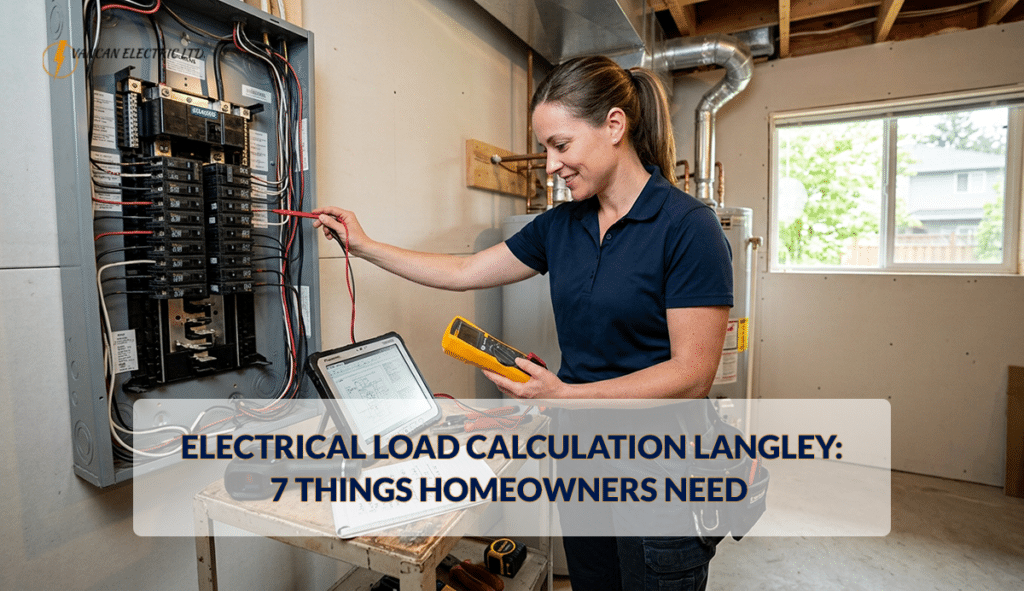
The electrician visits your property, measures the finished living area, records your panel’s current amperage and breaker layout, and lists every major appliance and fixed load, from your furnace to your washer and dryer.
Step 2: Applying Code-Based Demand Factors
Not every appliance in your home draws maximum power at the same moment, so the Canadian Electrical Code allows demand factors that reduce the calculated load for things like ranges, dryers, and general lighting circuits. This is where a home electrical load calculation becomes more than simple addition; it reflects how your household actually uses electricity throughout the day.
Step 3: Adding New or Planned Loads
Whether you are planning an EV charger, hot tub, or heat pump, the new equipment’s draw is added to your base load using the appropriate rule from the code. A thorough home electrical load calculation always accounts for future additions, not just what exists today, so you don’t have to redo the math for every small project.
Step 4: Comparing Total Load to Service Capacity
Finally, the calculated total is compared against your existing service size. If the number exceeds roughly 80% of your panel’s rated capacity, most electricians will recommend a service upgrade before proceeding, both for safety and to satisfy the local permit office.
What to Have Ready Before the Electrician Arrives
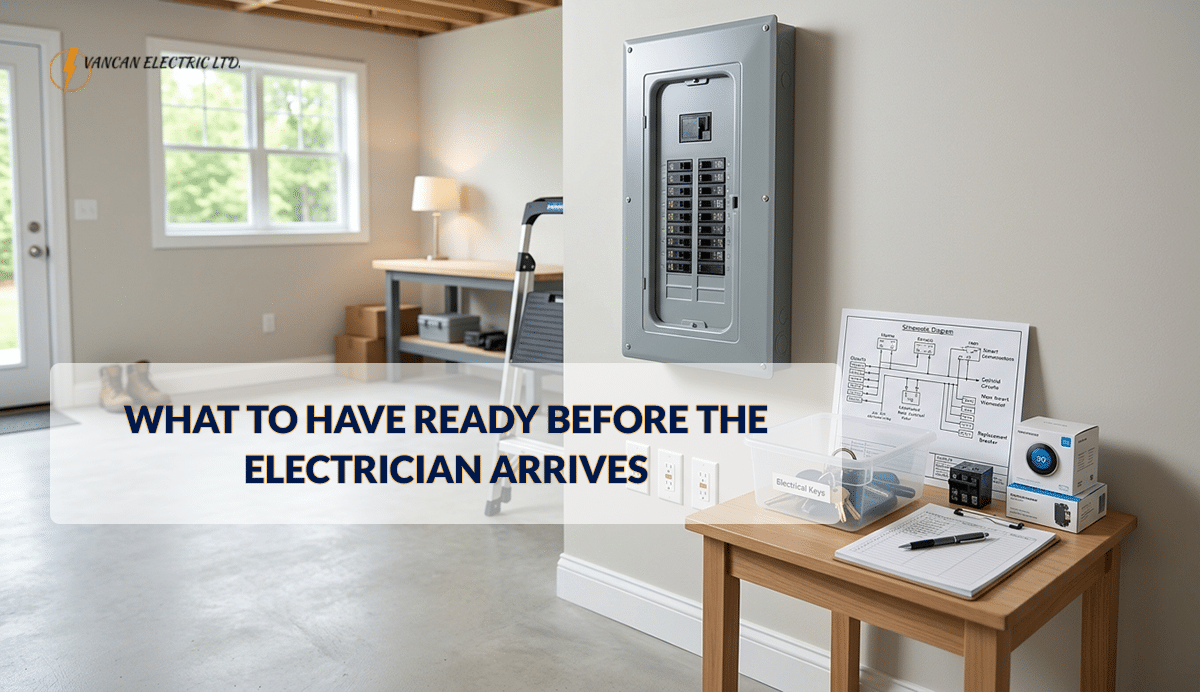
A little preparation speeds up your electrical load calculation Langley appointment significantly. Before your electrician’s visit, try to have the following on hand:
- A recent BC Hydro or FortisBC bill showing your average and peak usage
- The age and rated amperage of your existing panel, if known
- A list of any large appliances or equipment you’re planning to add in the next year or two
- Access to your electrical panel, attic, and crawl space if the electrician needs to trace circuits
- Any permits or documentation from a previous panel upgrade or renovation
Having this ready doesn’t just save time on-site, it also helps your electrician produce a more accurate home electrical load calculation on the first visit, rather than needing a follow-up appointment to track down missing details.
5. EV Charger Load Calculation: What Langley Homeowners Should Know
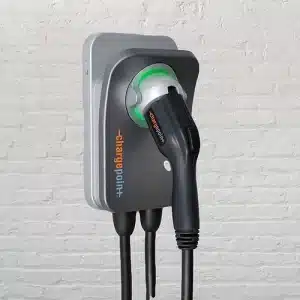
With more EVs on the road across the Fraser Valley, an EV charger load calculation has become one of the most common reasons homeowners contact us. Level 2 chargers can draw anywhere from 16 to 50 amps continuously, which is a meaningful addition to any home’s total demand.
| Charger Type | Typical Amperage | Voltage | Recommended Circuit |
|---|---|---|---|
| Level 1 (standard outlet) | 12–16 amps | 120V | Existing 15/20A circuit |
| Level 2 (home charger) | 16–40 amps | 240V | Dedicated 40–60A breaker |
| Level 2 (high-output) | 48–50 amps | 240V | Dedicated 60A breaker |
An accurate EV charger load calculation determines whether your existing panel has spare capacity or needs load management hardware, such as an energy management system that shares power between your charger and other large appliances, avoiding a full service upgrade in many cases. BC Hydro also offers rebates on qualifying Level 2 chargers, which makes now a practical time to have this assessed. If you’re ready to move forward, our team handles EV charger installation in Langley, Surrey, and Abbotsford from the initial load calculation through final inspection.
6. 200 Amp Service Calculation: Is Your Panel Big Enough?
A huge share of the calls we get start the same way: “How do I know if I need a bigger panel?” A proper 200 amp service calculation answers that question with numbers instead of guesswork.
| Home Size / Situation | Typical Recommended Service |
|---|---|
| Small home, gas heat, no EV | 100–125 amps often sufficient |
| Mid-size home, electric heat or heat pump | 150–200 amps |
| Larger home, EV charger, hot tub, or electric heat | 200 amps |
| New construction or secondary suite | 200 amps standard |
A 200 amp service calculation looks at your home’s total connected load, applies the code’s demand factors, and compares the result against your panel’s rating. Many older Langley homes were built with 100-amp services that were perfectly adequate in the 1980s but fall short once you add central air conditioning, an EV charger, and modern kitchen appliances. If your 200 amp service calculation shows you’re already near capacity, our electrical panel upgrade service in Langley and Surrey is designed to bring your home up to current code without unnecessary downtime. If you’re still weighing whether you actually need the bump in service size, our 100A vs 200A service comparison for BC homes walks through the trade-offs in more detail.
7. Electrical Capacity Assessment vs. Load Calculation: What’s the Difference?
These terms get used interchangeably, but there is a meaningful distinction. An electrical capacity assessment is typically a broader, on-site evaluation of your entire electrical system, panel condition, wiring age, grounding, and safety hazards, while a load calculation is the specific numerical exercise of adding up amperage against code-defined demand factors.
In practice, most electricians perform both together. A full electrical capacity assessment usually includes a load calculation as one of its core components, along with a visual inspection of your panel, breakers, and service entrance. If you’re not sure which one your project needs, our electrical audit service combines both, giving you a complete picture before you commit to any upgrade.
Hiring a Certified Electrician for Load Calculation in Langley
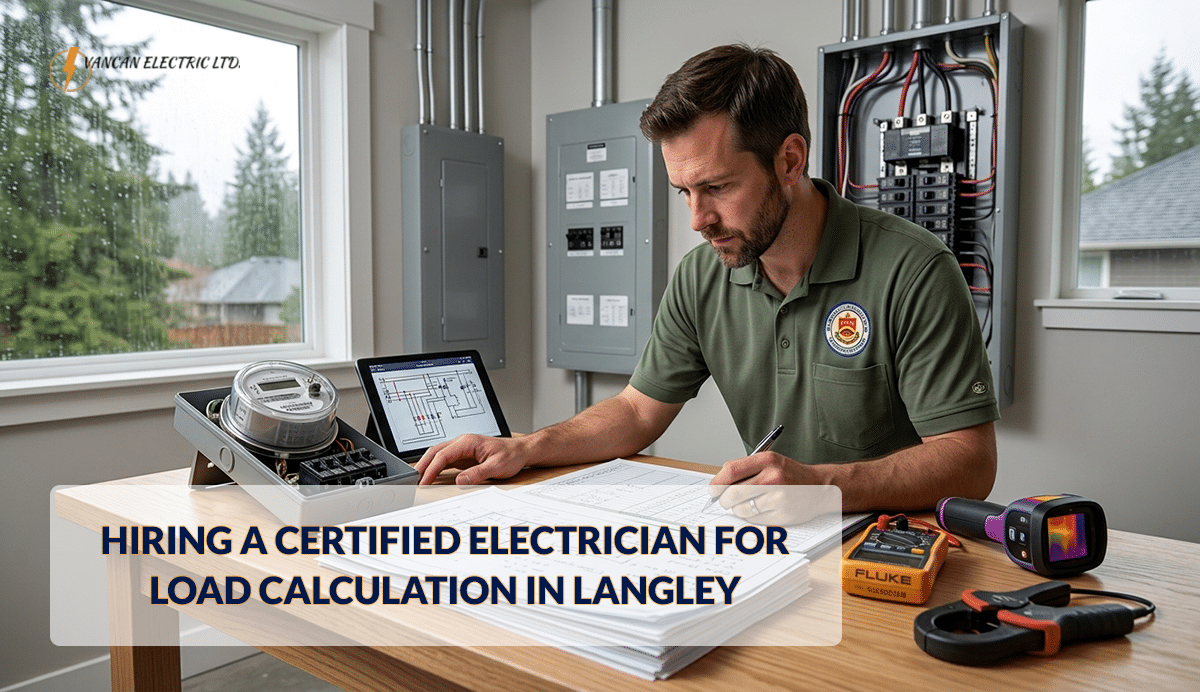
Choosing the right professional matters as much as the calculation itself. Here’s what to look for when hiring an electrician load calculation Langley homeowners can trust.
Licensing and Insurance
Confirm the electrician is licensed through Technical Safety BC and carries current liability insurance. Any electrician load calculation Langley residents rely on for permits must ultimately be signed off by a licensed professional, so unlicensed “handyman” work can create real problems down the line.
Local Code Knowledge
An electrician who regularly works with the Township of Langley and City of Langley permit offices will know their specific documentation requirements, which speeds up approvals significantly compared to a contractor unfamiliar with local processes.
Experience With Modern Loads
Ask directly about their experience with EV chargers, heat pumps, and hot tub circuits, since these newer load types require more nuanced calculations than a standard renovation.
Transparent Written Quotes
A trustworthy electrician load calculation Langley provider will give you a written estimate before starting, along with a clear explanation of whether your existing service is adequate or a panel upgrade path makes more sense.
Common Mistakes Homeowners Make With Electrical Load Calculations
- Skipping the calculation entirely and hoping a new appliance “should be fine,” which can lead to failed inspections or dangerous overloading
- Using online calculators as a final answer instead of a starting estimate, when only a licensed electrician’s calculation satisfies permit requirements
- Forgetting future additions, such as planning for an EV charger next year but not accounting for it in this year’s calculation
- Assuming a bigger panel is always the fix, when load management devices can sometimes solve the problem for a fraction of the cost
- Delaying the assessment until after a project starts, which often means redoing work once the real numbers come in
Cost of an Electrical Load Calculation in Langley
Pricing for an electrical load calculation BC-wide can vary by region, and Langley is no exception. Cost depends on home size, panel accessibility, and whether the calculation is bundled with a broader electrical audit. As a general guide, a standalone load calculation is a modest cost compared to the price of an unplanned service upgrade discovered mid-project. Bundling it with an inspection, such as our mobile home inspection or standard residential audit, is usually the most cost-effective route, since you get both the numbers and a visual safety check in a single visit.
Why Local Experience Matters for Electrical Load Calculation in Langley
Not every electrician who can wire a light fixture is comfortable running a full electrical load calculation Langley permit offices will accept without questions. It takes familiarity with the current BC Electrical Code, the specific demand factor tables, and the documentation format local inspectors expect. Vancan Electric is a BBB-accredited, licensed electrical contractor that has been performing electrical load calculation Langley homeowners depend on for panel upgrades, EV chargers, hot tubs, and new construction across the Township and City of Langley for years.
Because our electricians work in this community every week, we know which neighbourhoods commonly have older 100-amp services, which municipal offices need extra documentation, and how to structure a load calculation so it holds up the first time you submit it. That local, hands-on experience is exactly what separates a reliable electrician load calculation Langley homeowners can trust from a generic, one-size-fits-all estimate. It also means fewer surprises once the permit is in hand and the work actually begins.
Conclusion
A proper electrical load calculation Langley homeowners can rely on is not just a bureaucratic checkbox, it is the difference between a safe, permit-approved project and a costly redo. Whether you’re weighing a 200 amp service calculation before an EV purchase, wondering do I need a load calculation for a hot tub, or simply due for an electrical capacity assessment on an older home, the process starts with the same first step: bringing in a licensed electrician who knows the local code inside and out.
Our team has handled electrical load calculation Langley projects across the Township and City of Langley for years, and we’re glad to walk you through what your home specifically needs. For hands-on help with wiring beyond the panel itself, our residential wiring services team can take care of everything from the calculation to the final connection.
Ready to get started? Contact Vancan Electric for a free quote, or read what Langley homeowners are saying about us on our Vancan Electric Google Business Profile.