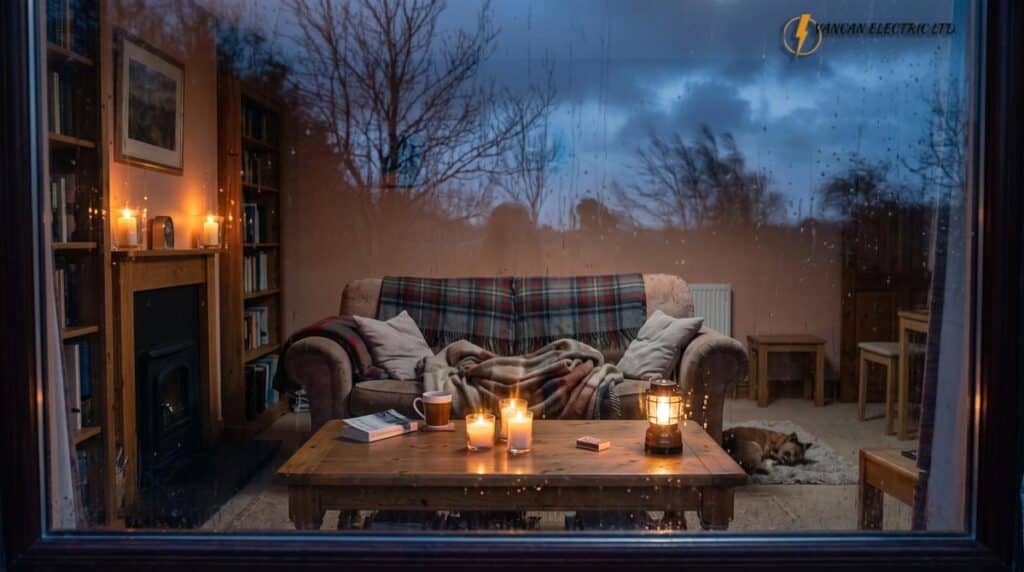

Storms can move through Langley and Surrey quickly, especially during the fall and winter months. One minute everything feels normal, and the next minute the lights are out, the heat is off, and everyone is looking for a flashlight.
Knowing what to do during a power outage helps you stay calm and protect your home. This guide covers the first steps to take, how to check BC Hydro updates, when to call 911, how to keep food safe, and what to watch for when power comes back.
At Vancan Electric, we work with homeowners across Langley, Surrey, and nearby Lower Mainland communities. This is the same practical advice we share with local homeowners who call us after flickering lights, storm damage, breaker issues, or repeated power problems.
Quick Steps When the Power Goes Out
If the power goes out in your home, start with these steps:
- Check whether nearby homes and streetlights are also without power.
- If your neighbours still have power, check your breaker panel. The issue may be inside your home.
- If the outage looks wider, check BC Hydro’s outage map.
- If your outage is not listed, report it to BC Hydro at 1-888-POWERON (1-888-769-3766).
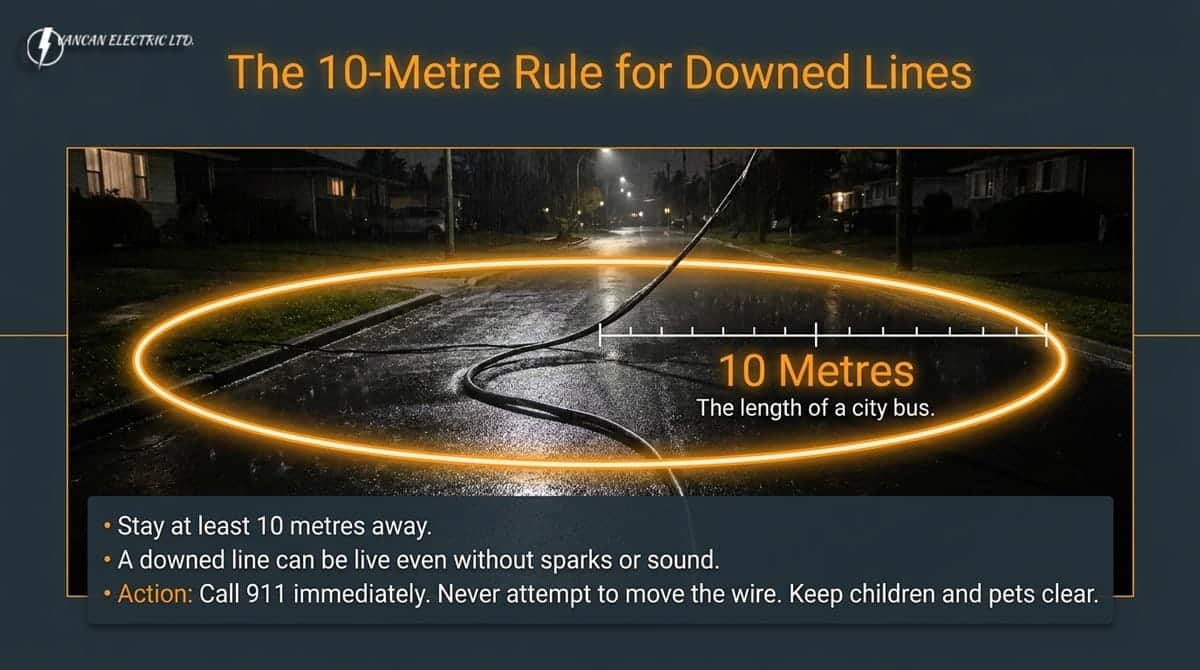
- Stay at least 10 metres away from any downed power line and call 911.
- Turn off or unplug major appliances and sensitive electronics.
- Leave one indoor light switched on so you know when power returns.
- Keep fridge and freezer doors closed as much as possible.
- Never run a portable generator indoors, in a garage, or near windows, doors, or vents.
- If you see fire, heavy smoke, or an immediate electrical hazard, move away and call 911.
Why Power Outages Happen in the Lower Mainland
Power outages in Langley and Surrey often come down to a few common causes. Understanding the likely cause can help you decide what to check first and whether the issue is probably with BC Hydro’s grid or your home’s electrical system.
Storms and Fallen Trees
Wind, heavy rain, and saturated soil are a common mix in the Lower Mainland. During fall and winter storms, tree branches can break or entire trees can come down on overhead power lines.
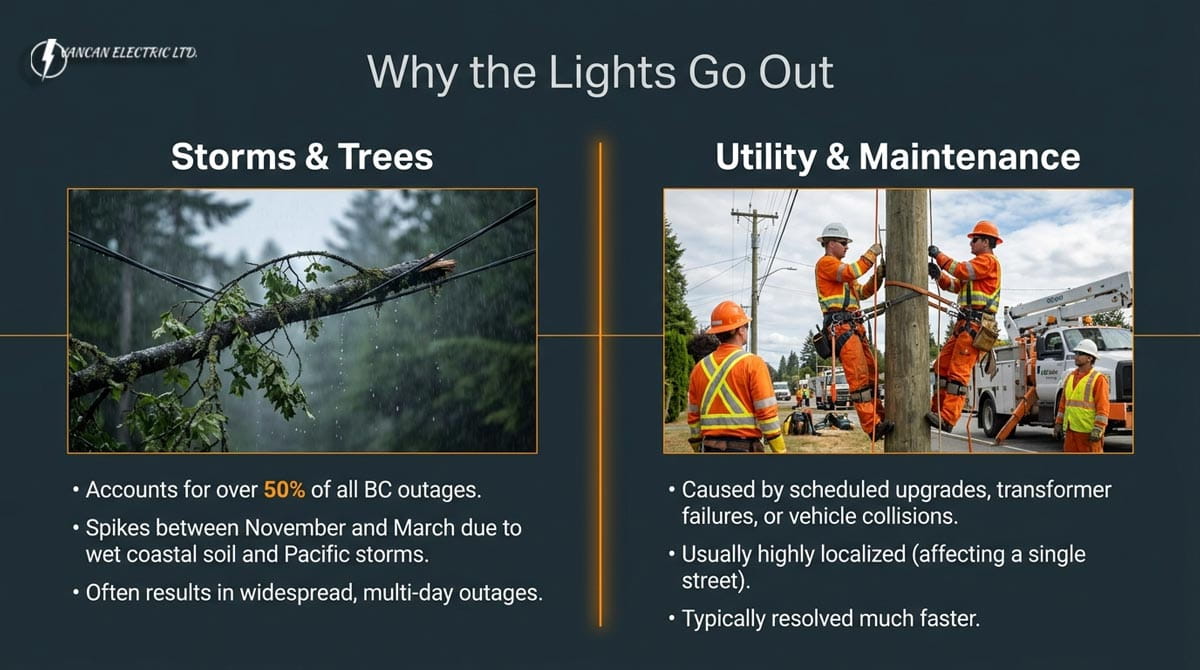
This is one reason outages often increase between November and March, when Pacific storms move through the region. In areas with mature trees, overhead lines, or more rural properties, outages can sometimes affect several streets or neighbourhoods at once.
Utility Maintenance and Equipment Problems
Not every outage is caused by weather. Other common causes include:
- Scheduled maintenance or equipment upgrades
- A transformer or power pole issue
- A vehicle hitting a utility pole
- Underground or overhead equipment failure
- A localized issue affecting one street or small area
Scheduled outages are usually announced in advance by BC Hydro. Unplanned outages can happen suddenly and may have a changing estimated restoration time as crews assess the cause.
What to Do During a Power Outage
Before you reach for candles or start unplugging everything, take a minute to figure out what kind of outage you are dealing with.
Look outside and check whether nearby homes, streetlights, or businesses still have power. If your neighbours have power and only your home is dark, the issue may be with your breaker panel, service connection, or wiring. In that case, avoid repeatedly resetting breakers if they keep tripping.
If the outage appears to affect the wider area, check BC Hydro’s outage map first. If your outage is not listed, report it by calling 1-888-POWERON (1-888-769-3766).
Then take these steps:
- Turn off or unplug major appliances, electric heaters, and sensitive electronics.
- This can help protect them when power is restored.
- Leave one indoor light switched on so you know when the power comes back.
- Keep fridge and freezer doors closed as much as possible.
- Use flashlights or battery-powered lanterns instead of candles whenever possible.
- Avoid opening your garage door repeatedly if it has an electric opener and you may need battery backup or manual access later.
When to Call 911 During a Power Outage
Some outage situations are emergencies. If you see fire, heavy smoke, a downed power line, sparking equipment, or any immediate danger, move away from the area and call 911.
Do not try to inspect damaged electrical equipment yourself. Do not touch fences, trees, vehicles, or puddles that may be in contact with a downed line.
If there is no immediate danger but you heard a loud bang, saw a flash, or noticed unusual electrical activity before the outage, include that detail when you report the outage to BC Hydro. It may help crews locate the problem faster.
Staying Safe During the Outage
Safety matters more than convenience. A few precautions in the first hour of an outage prevent most injuries and property damage.
Downed Power Lines: Stay Back and Call 911
A downed power line can still be live even if it is not sparking, moving, or making noise. Stay at least 10 metres away, which is about the length of a city bus.
Call 911 and keep children, pets, and other people away from the area. Never try to move a power line, tree branch, or object that is touching a line.
If a power line falls on a vehicle, stay inside the vehicle if it is safe to do so and call 911. If you must leave because of fire or another immediate danger, jump clear without touching the vehicle and the ground at the same time, then shuffle away with your feet close together.
Using Flashlights and Backup Lighting Safely
Flashlights and battery-powered lanterns are safer than candles during a power outage. Candles can easily start a fire if they are left unattended, placed near curtains, or knocked over by children or pets.
A simple outage kit should include:
- Flashlights or battery-powered lanterns
- Spare batteries
- A charged power bank
- A battery-powered or hand-crank radio
- A small first aid kit
- Any essential medications
- Warm blankets
- Bottled water
Store your flashlights somewhere easy to find in the dark, such as a front hall closet, kitchen drawer, or bedside table. Keep spare batteries in the same place so you do not have to search for them during an outage.
Generator Safety During a Power Outage
Portable generators can be useful during a longer outage, but they can also be dangerous if they are used incorrectly. The biggest risk is carbon monoxide, a gas you cannot see or smell.
Never run a portable generator indoors, in a garage, in a carport, on a balcony, or near open windows, doors, or vents. Keep it outside and well away from the home so exhaust cannot enter living areas.
You should also never plug a portable generator directly into a wall outlet or home circuit. This can cause backfeeding, which can endanger utility crews, damage equipment, and create a serious fire or shock hazard.
If you want to power selected circuits in your home during an outage, use a properly installed transfer switch or have a licensed electrician install a safe generator connection. For homeowners who want automatic backup power, a standby generator can be a safer and more convenient option when installed correctly.
Protecting Your Food During a Power Outage
Keep fridge and freezer doors closed as much as possible. Every time you open the door, cold air escapes and your food may warm up faster.
| Appliance | Safe Without Power | What to Do |
|---|---|---|
| Refrigerator | Up to 4 hours | Keep the door closed and check food temperature before eating perishables |
| Full freezer | About 48 hours | Keep closed. A full freezer holds cold longer |
| Half-full freezer | About 24 hours | Keep closed and group items together if possible |
As a general guide:
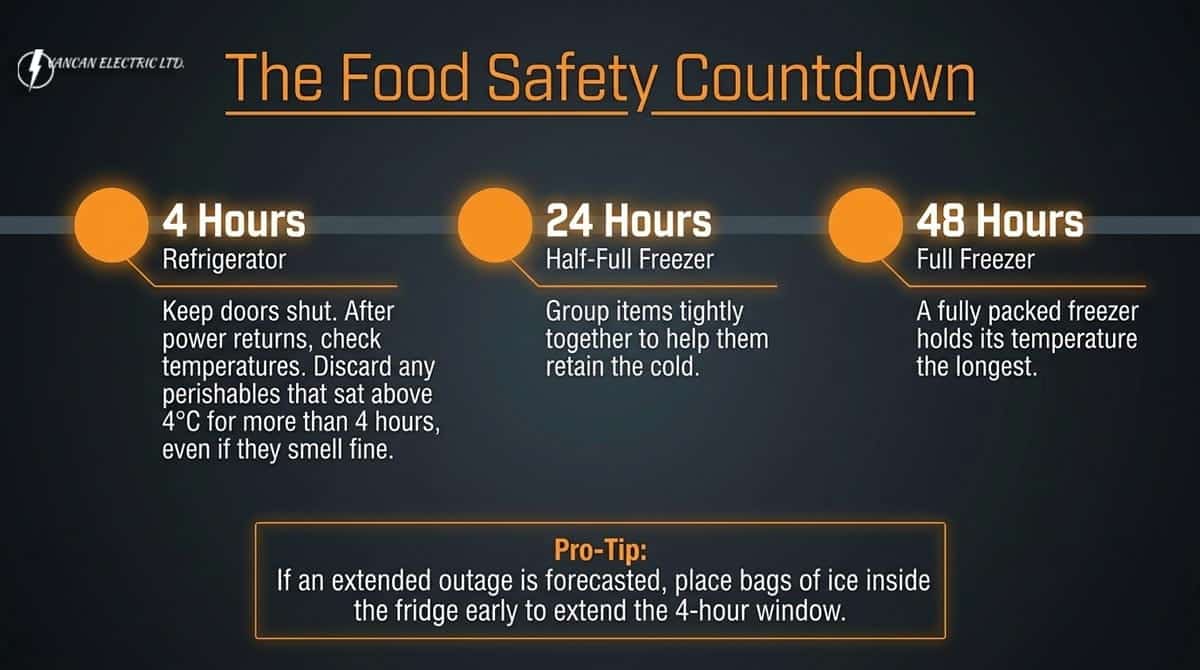
- Refrigerator: up to 4 hours if the door stays closed
- Full freezer: about 48 hours if the door stays closed
- Half-full freezer: about 24 hours if the door stays closed
A full freezer holds cold longer than a half-empty one. If you know the outage may last a while, grouping frozen items together can help them stay cold longer.
If the outage is expected to run long, placing bags of ice in the fridge may help extend the safe window. When power returns, check the temperature and condition of perishable food. Any perishable food that has been above 4°C for more than 4 hours should be thrown out, even if it looks or smells normal.
When in doubt, throw it out.
Keeping Your Home Warm or Cool Without Power
Many homes in Langley and Surrey rely on electrical systems in some way, whether that means electric baseboard heaters, heat pumps, furnace fans, thermostats, or controls. During a winter outage, that can mean losing heat as well as lights.
To stay warmer during a winter outage:
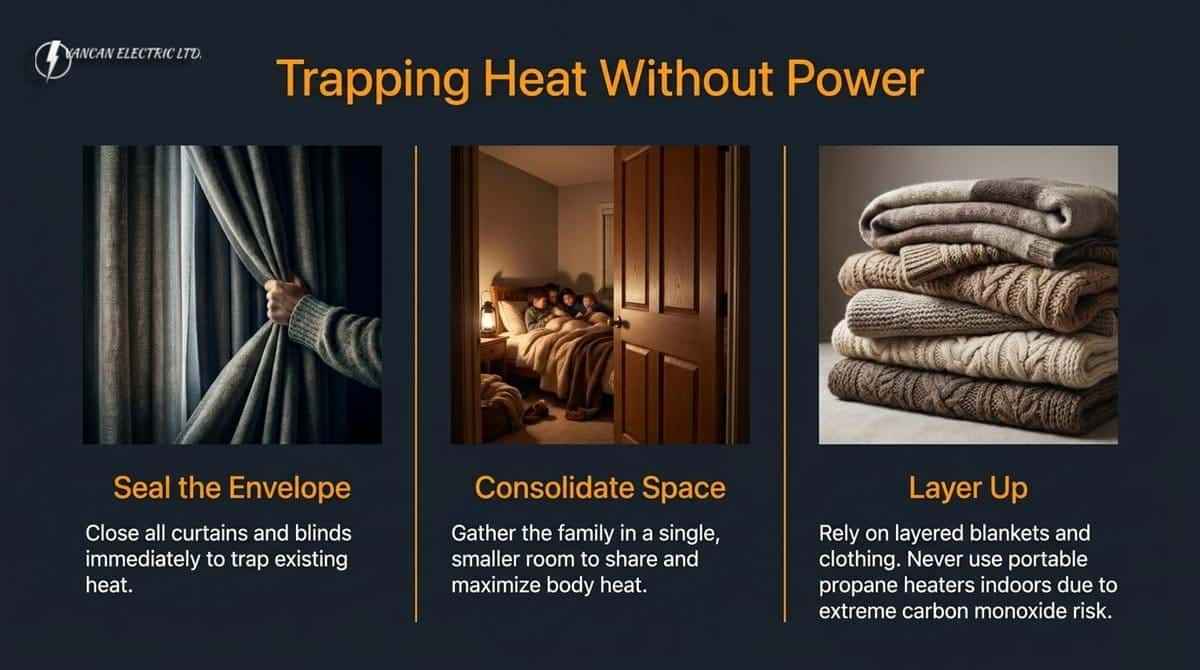
- Close curtains and blinds to help hold heat inside
- Gather in one smaller room instead of spreading out across the house
- Wear layers and use blankets
- Close doors to rooms you are not using
- Avoid using outdoor propane heaters, barbecues, or camping stoves indoors
In summer, keep blinds closed during the hottest part of the day. Open windows later in the evening if the outdoor temperature drops and it is safe to do so.
If your home becomes dangerously cold or hot, do not wait too long. Consider going to a friend’s home, a community centre, or another safe heated or cooled location.
What to Do When the Power Comes Back On
When power returns, take a few minutes before turning everything back on. Your home’s electrical system may experience a sudden load if too many appliances and devices restart at once.
Start with the essentials, such as the fridge and freezer. Then wait 10 to 15 minutes before plugging in or switching on other appliances, heaters, and electronics.
If lights flicker for a moment when power returns, that may settle quickly. But ongoing flickering, buzzing, burning smells, warm outlets, or repeated breaker trips should be taken seriously.
Why You Shouldn’t Turn Everything On at Once
When power is restored, the electrical system needs a moment to stabilize. Turn on your most essential items first, such as the fridge, then wait 10 to 15 minutes before plugging in and switching on everything else. This reduces the load spike that can trip breakers or strain equipment that just came back online.
Signs of Electrical or Surge Damage to Watch For
Power restoration can sometimes reveal problems with wiring, breakers, outlets, or sensitive electronics. Watch for these warning signs:
- Outlets that spark, buzz, or feel warm
- Breakers that trip again after being reset
- Lights that keep flickering after power has stabilized
- A burning smell near outlets, switches, or the electrical panel
- Electronics that no longer turn on
- Appliances that behave strangely after the outage
- Discoloured outlets or switch plates
If you notice sparking outlets, don’t keep testing them yourself. Sparking outlets are a sign of a wiring problem that a licensed electrician should look at before it becomes a bigger hazard.
Conclusion
A power outage is easier to manage when you know what to do first. Check whether the outage is local to your home or part of a wider BC Hydro issue, report it if needed, stay away from downed lines, keep fridge and freezer doors closed, and turn appliances back on gradually when power returns.
If your power problems happen more often than your neighbours’, the issue may be inside your home rather than on the grid. Flickering lights, warm outlets, repeated breaker trips, burning smells, and partial power loss should be checked by a licensed electrician.
Vancan Electric helps homeowners in Langley, Surrey, and nearby Lower Mainland communities with residential wiring, electrical troubleshooting, surge protection, safe generator connections, and standby generator installation. If you want your home ready before the next storm, contact Vancan Electric to book an inspection or service call.