You have bought the car, or you are about to, and the next question is practical: where will it charge? In a detached Langley home with your own garage and panel, the answer is usually straightforward. In a strata townhouse, it starts somewhere else — with who owns the parking stall, who owns the wiring route, and who must approve the work before anyone drills a hole.
The short answer is yes, many Langley strata owners can install an EV charger. The longer answer is that the route depends less on the charger you pick and more on your strata’s rules, your building’s electrical capacity, and where your car parks. Sorting those three things out first avoids the most common frustration: buying a charger, then discovering the install cannot go ahead as planned.
This guide covers that order for townhouse owners in Langley City, Willoughby, Walnut Grove and Brookswood. It is general information, not legal advice. Every complex has its own bylaws, and those bylaws matter most.
Why Strata Charging Is Different
In a detached home, you generally control the garage, the panel and the wall the charger mounts on. In a strata townhouse, those things may be split. Your unit may include a garage, while the parking pad, driveway, electrical room and wiring route may be common property, limited common property, or something in between.
That split affects who must approve the work, whether a circuit can come from your own panel or a shared supply, and who pays for electricity if households share a supply. It also affects timing: a strata install may need a council decision first. Start that conversation early, ideally before you buy the charger.
Step 1: Start With Approval, Not the Charger
Get the strata side in writing before comparing charger brands. That protects you from the worst outcome: paying for equipment and work the strata later asks you to move or remove.
Ask your council or property manager about where you park and whether that stall is yours, assigned or shared; where the charger would mount and how the cable would run; whether the circuit would come from your own panel or a shared room; and who pays for installation, electricity and maintenance. Ask what the strata needs in return — written approval, a sketch or photo, proof of permit, or proof a licensed electrician will do the work. Keep that approval with your home documents.
Do not assume a neighbour’s approval applies to you, even in the same complex, because stalls, panels and wiring routes differ by unit. And do not assume a visitor stall can become your private charging spot. Visitor parking is normally for visitors, and a private charger there needs a specific, written agreement — confirm it before spending anything.
Step 2: How Power Usually Reaches a Strata Stall
A site visit confirms which of these four patterns fits your home. In the simplest pattern, your townhouse has its own panel and a garage or carport close enough for a dedicated circuit. You pay through your own meter, and the main questions are capacity, cable route and approval for shared-area work.
In the second pattern, your panel is close to capacity for a full-power Level 2 charger. A load management device can help: it monitors total demand and pauses or slows charging when the house is busy, then resumes when demand falls. VanCan Electric’s service pages note this as a way to avoid a more expensive panel upgrade in many homes.
In the third pattern, parking is served by a shared supply — a common panel, a shared charger, or load sharing across stalls. This needs the clearest written agreement, because it raises billing, access and maintenance questions a single-home install never raises. In the fourth pattern, the stall is too far from practical power — a detached pad or a spot across a shared lane — which usually means trenching, conduit, a pedestal charger and restoration work.
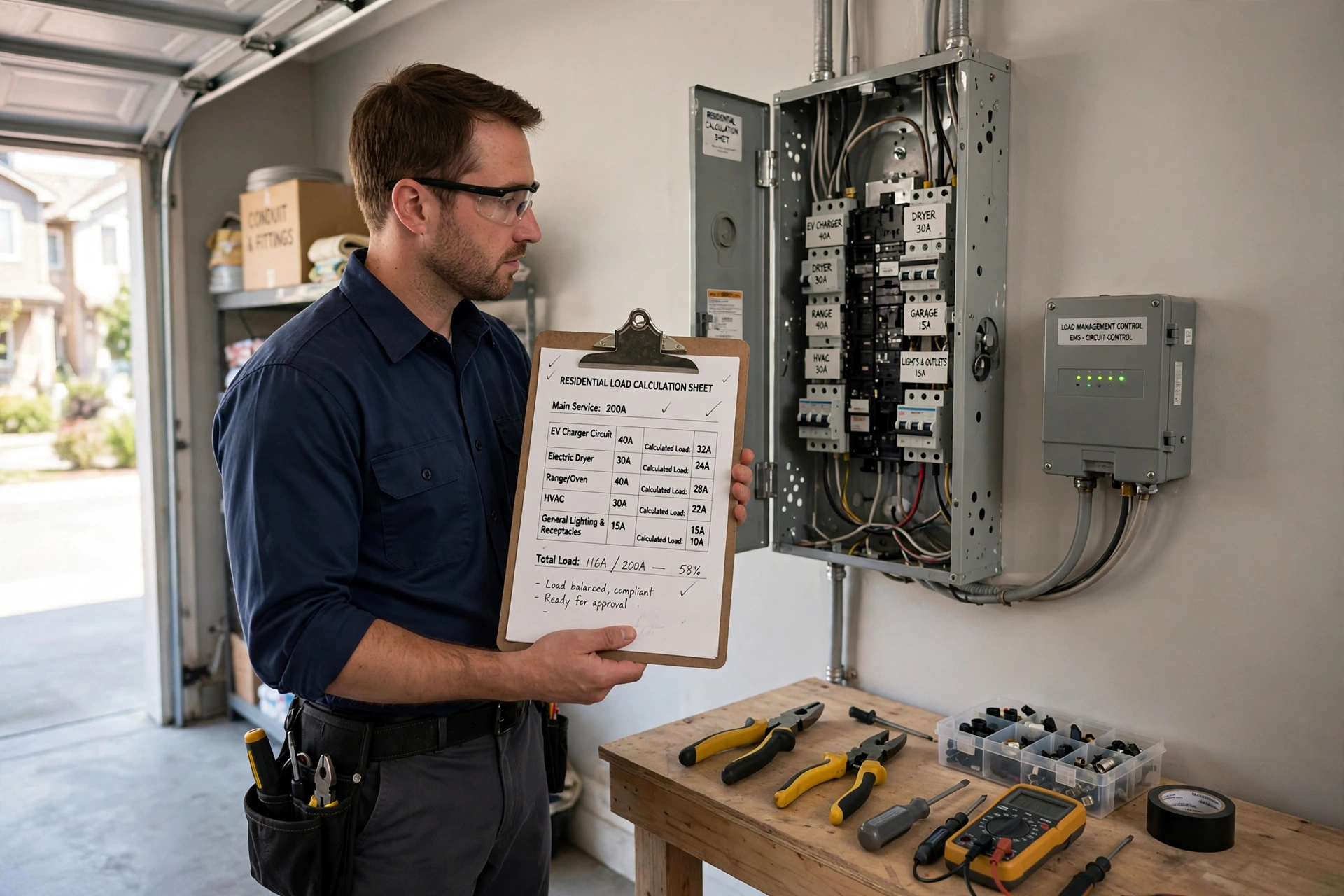
In every pattern, a load calculation comes first. In British Columbia, plans and a load calculation by a qualified person are part of the permit application for EV charging equipment, as VanCan Electric explains in its outdoor-charger guide. The calculation answers one question: can this panel safely take this new, long-running load, or does something need to change first?
Comparison Table: Four Ways a Langley Strata Townhouse Can Charge
| Option | How it works | Best for | What can slow it down | Safety note |
|---|---|---|---|---|
| Dedicated circuit | New circuit from your panel to your garage or carport charger. | Nearby panel, spare capacity, private stall. | Approval for shared-area wiring; long cable route. | Load calculation and permit first. |
| Load-managed charger | Charger shares capacity and slows or pauses when the house is busy. | Homes close to capacity, no full upgrade needed. | Device compatibility; shared-area approval. | It manages capacity, it does not create it. |
| Shared charging | Chargers fed from a common supply, sometimes shared across stalls. | Shared parking or several EV owners at once. | Council decisions; written billing agreement. | Agree access and billing in writing first. |
| Pedestal charger | Power runs underground to a post near the stall. | Detached pads with no nearby wall. | Trenching, locates and restoration. | Locate utilities before digging. |
Cost factors, not prices: distance from panel to stall, trenching, any panel or service change, charger model, and strata-required restoration. No exact price is quoted here because those factors vary by complex — a site visit and written quote are the honest way to price your job.
Step 3: The Stall, the Visit and the Weather
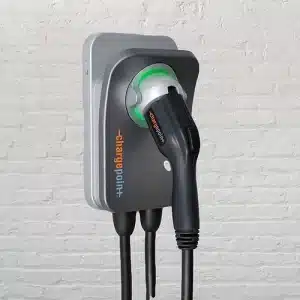
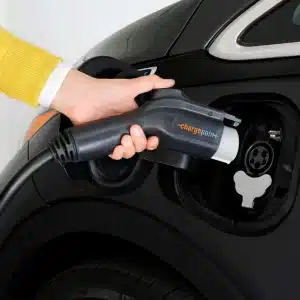
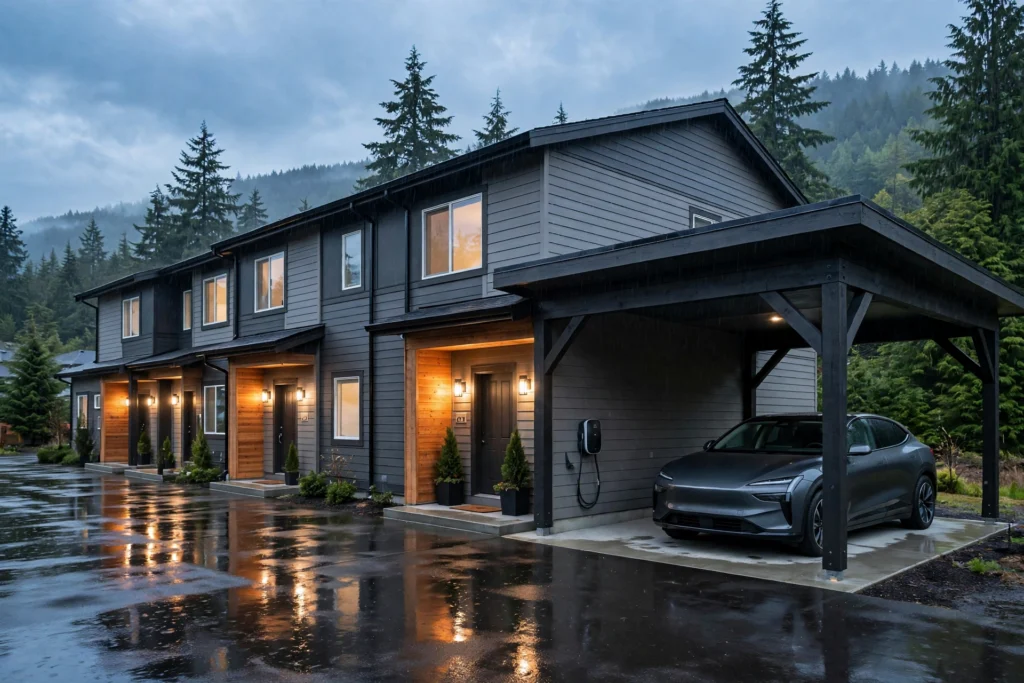
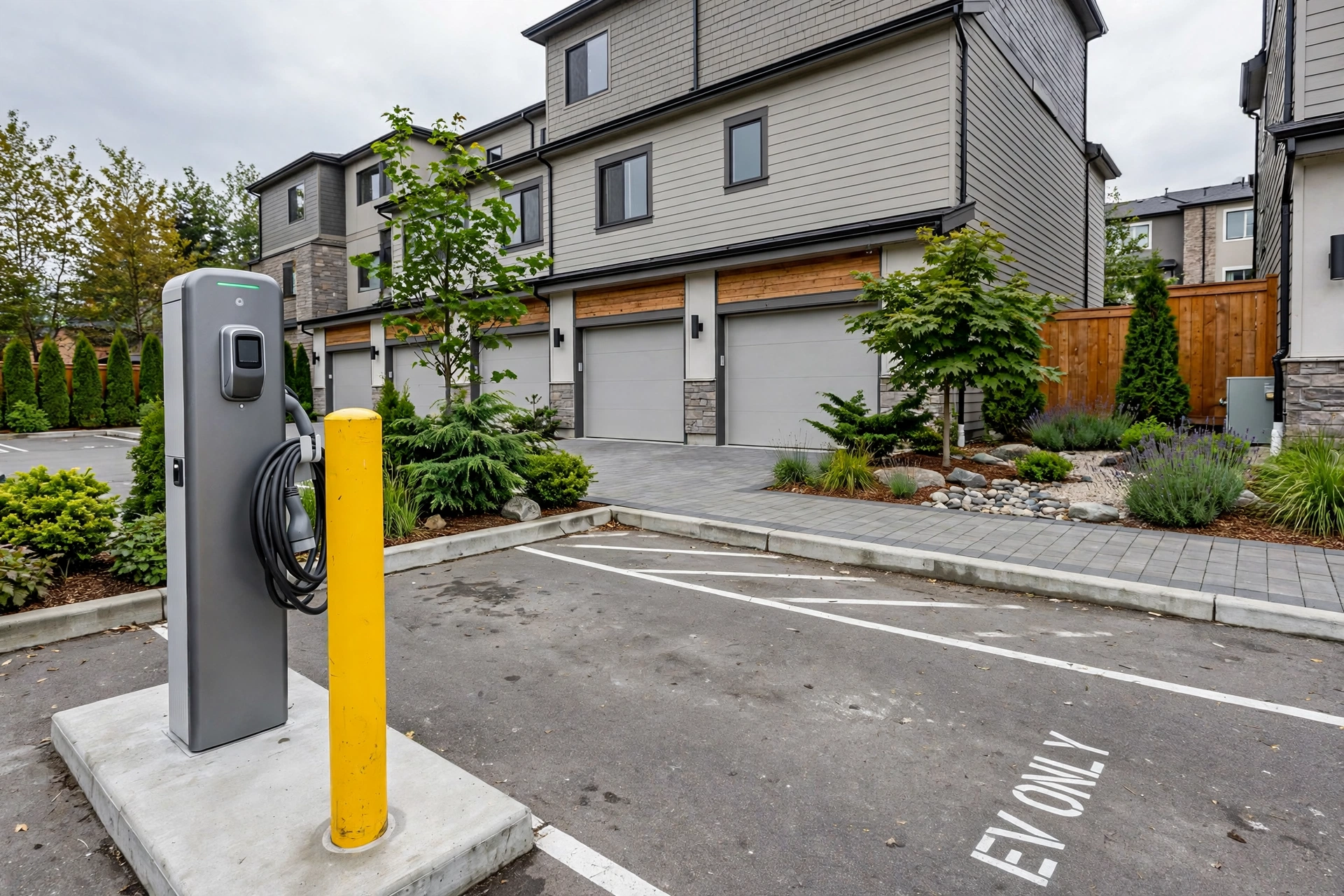
Park as you normally do, with the second car in place if you have one, and check where your car’s charge port sits. Most home charger cables are roughly 18 to 25 feet long, and the cable should reach the port without being pulled tight, crossing a walkway, or lying where neighbours walk or drive. A garage stall is usually simplest. A carport needs more thought about wind-driven rain and drip lines. An open pad may need a pedestal, a bollard or wheel stop, lighting, and a cable holster so the connector never sits on wet ground. A cable across a shared driveway is a tripping hazard and a strata issue — raise it at approval stage, not after installation.
A good site visit covers the whole path from power source to stall: panel and label, service size, load calculation, your driving pattern, and a walk of the full cable route. Have ready a photo of your panel and label, a photo of your stall, and any strata correspondence so far. If you have not bought a charger yet, that is often better — the right charger depends on the panel, the stall and the strata’s conditions, in that order.
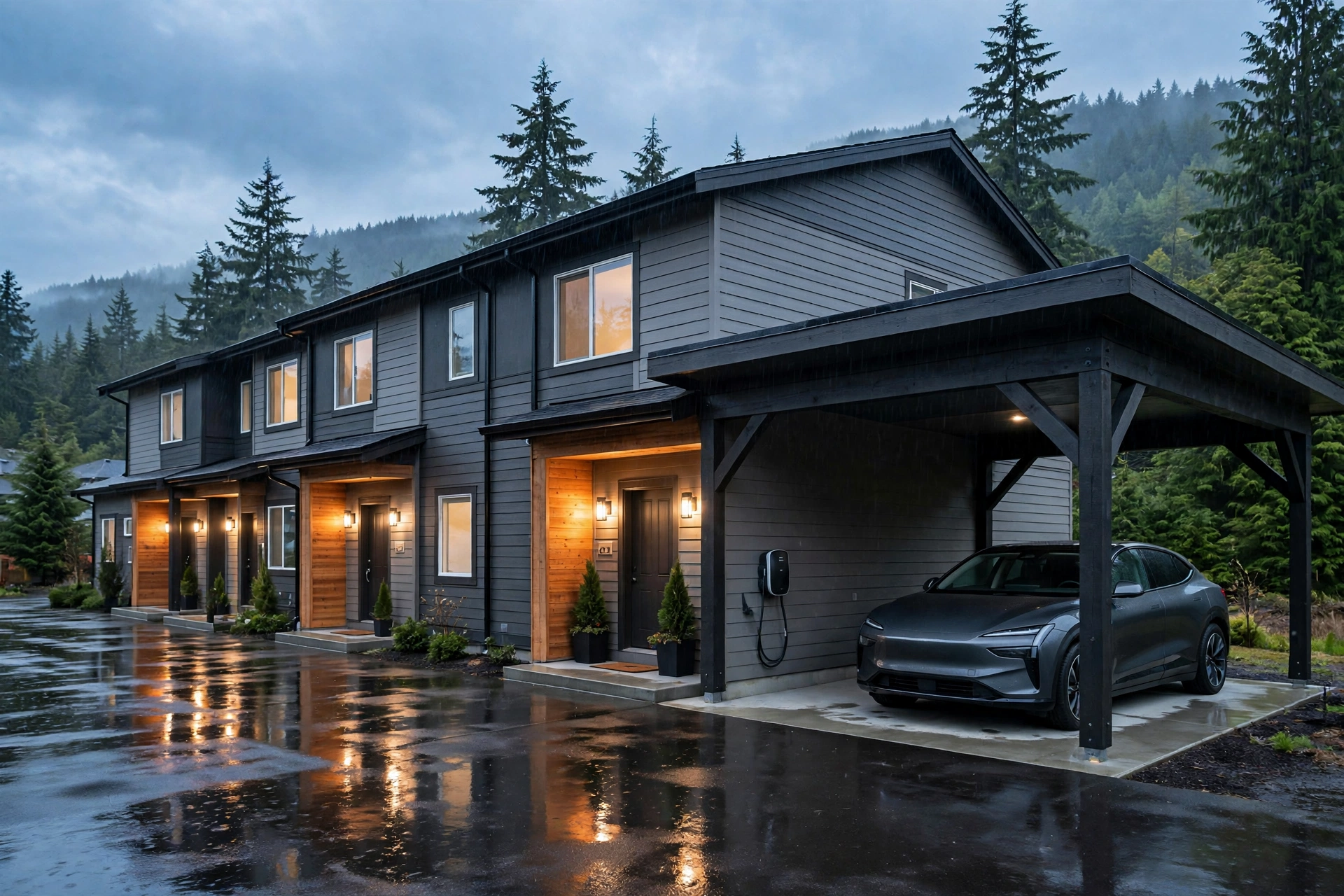
For outdoor or carport chargers, Langley’s rain is the everyday test. The charger needs a weather rating suited to its exposure, a sealed wall entry, and a simple routine: hang the connector in its holster after every charge, keep the cable off the ground, and never use a household extension cord for EV charging.
Billing and Sharing Fairly
If your charger runs from your own panel and meter, billing is simple: you pay for what you use. If it runs from a shared supply, billing needs an agreement — for example, a submeter, a smart charger that records use by account, or a flat arrangement set by the strata. Do not leave this verbal: a short written note covering electricity, repairs, access and what happens if you move out prevents most later disputes. Also ask whether other owners have enquired.
Frequently Asked Questions
Can a strata in Langley refuse an EV charger outright?
It depends on the bylaws, the parking arrangement and the building’s capacity, so no guide can promise approval for every complex. A strata may set reasonable conditions on location, wiring, permits and restoration. Present a complete, licensed proposal, get the decision in writing, and ask what would need to change if the first design is not approved. If the answer affects your legal rights, get independent legal advice.
Do I need a permit for a strata EV charger in BC?
In most cases, yes. This kind of electrical work is permitted work, and a load calculation by a qualified person is part of the permit application for EV charging equipment in BC. Your electrician should handle the permit side and confirm the inspection route. Work without a required permit can cause problems at resale, with insurance and with the strata.
Will I need a panel upgrade, or will load management be enough?
That is what the load calculation is for. Some townhouses have spare capacity for a dedicated Level 2 circuit; others are close enough that load management avoids a larger upgrade; still others genuinely need a service or panel change, especially with a hot tub, heat pump, suite or second EV in the picture. Anyone who answers without seeing your panel and running the calculation is guessing.
Can I charge from a regular outdoor outlet until approval comes through?
A standard outlet is not a substitute plan for regular EV charging, and it should not be used as a workaround in shared parking without strata approval and an electrician’s advice. Level 1 charging is slow, the outlet and circuit may not be rated for hours of continuous load, and an extension cord across shared space is a tripping hazard.
What if my stall is far away, or I only have visitor parking?
Distance changes the design, not necessarily the answer: a pedestal charger with underground conduit can serve a detached pad, but adds trenching, restoration and approval for digging. Visitor parking is different — it is not normally a private stall, so a private charger there needs a specific, written agreement, and in many complexes it will not be approved. Confirm the stall question before spending money on equipment.
The Bottom Line
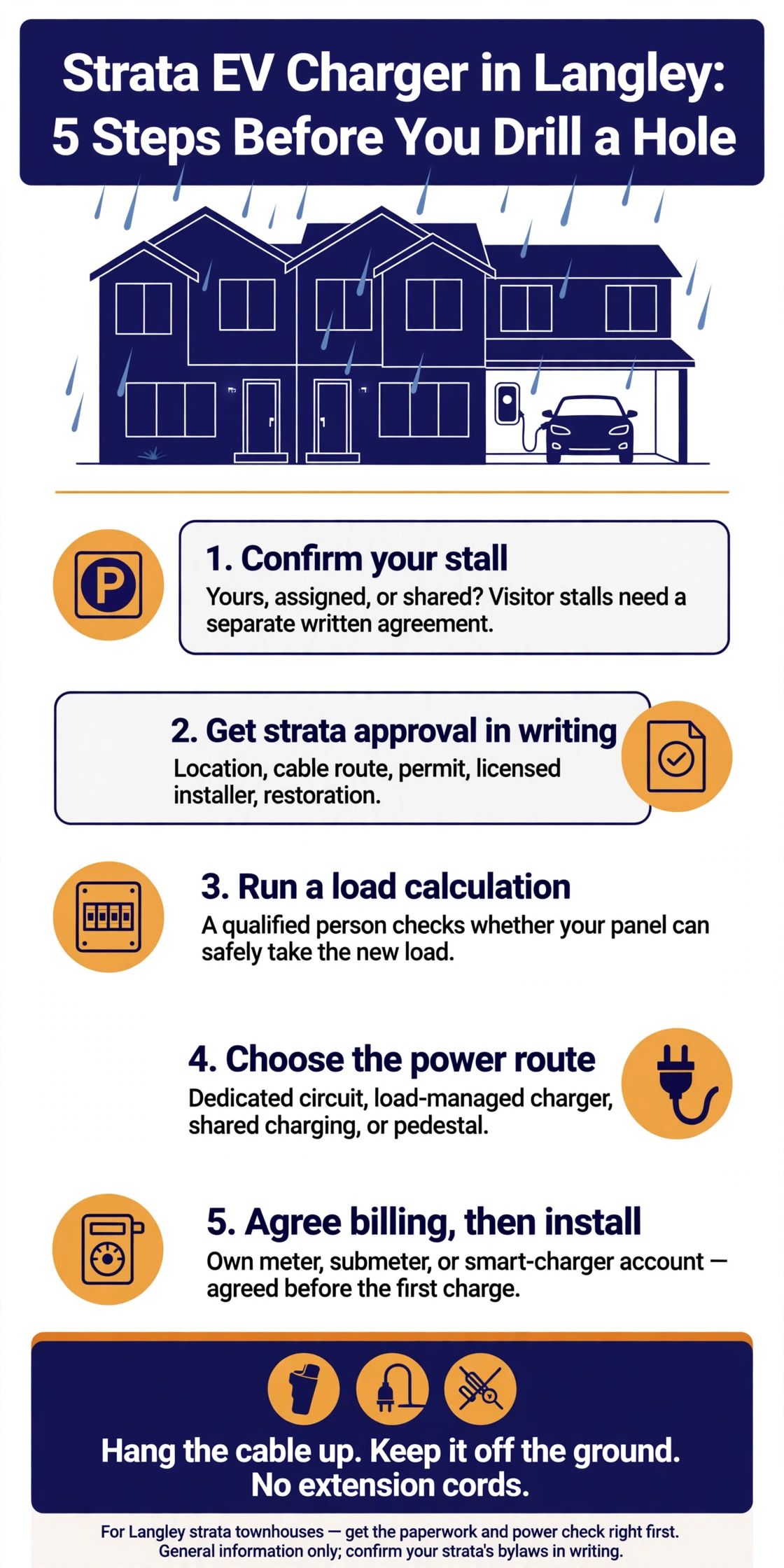
A strata EV charger is a small construction project with a paperwork step at the front, not just a product you buy and plug in. Get approval in writing, confirm the stall and power source, let the load calculation decide between a dedicated circuit and load management, and agree billing before the first charge.
If you live in a Langley strata townhouse, start with a site visit rather than a charger purchase. For the service itself, see VanCan Electric’s Level 2 EV charger installation in Langley page, and if your panel is already a concern, an electrical audit is a sensible first check. For weather ratings and cable care, VanCan Electric’s outdoor EV charger guide covers it in detail.