
By Majid Akhbari, Red Seal Construction Electrician and Class B FSR | VanCan Electric, Langley, BC | Updated November 2026
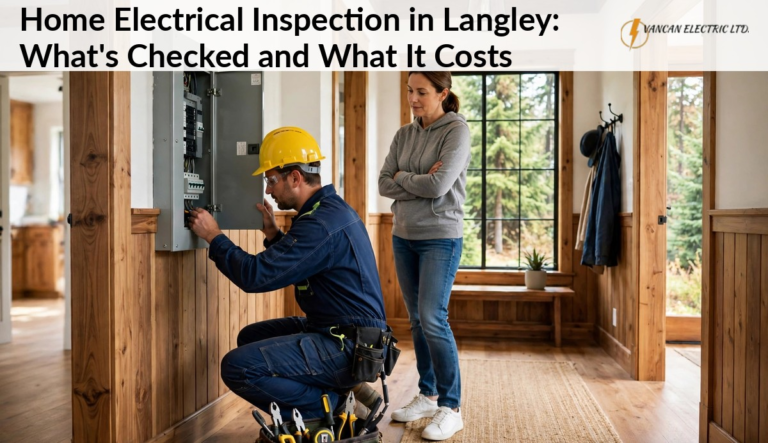
Most Langley homes hide their electrical problems behind drywall. A breaker panel can look tidy while a loose connection heats up inside it, and a 1970s house can have aluminum wiring that has never been checked. You cannot see any of that from the hallway. That is what an inspection is for: a licensed electrician opens the panel, tests the circuits and tells you, in writing, what is safe, what needs watching and what has to be fixed now.
A home electrical inspection in Langley is a focused check of your electrical system by a licensed electrician, not a general home inspection and not a repair visit. It covers the service and panel, the wiring type, grounding and bonding, GFCI and AFCI protection, outlets and switches, and your smoke and carbon monoxide alarms. This guide explains what is checked, when to book, what drives the cost and what to do with the report.
An inspection is not only for buyers. A Langley homeowner with a 40-year-old panel, flickering lights or a new insurance renewal letter has as much reason to book one. The report gives you a prioritised list: what is dangerous today, what will become a problem, and what is fine. That list is what this guide helps you read.
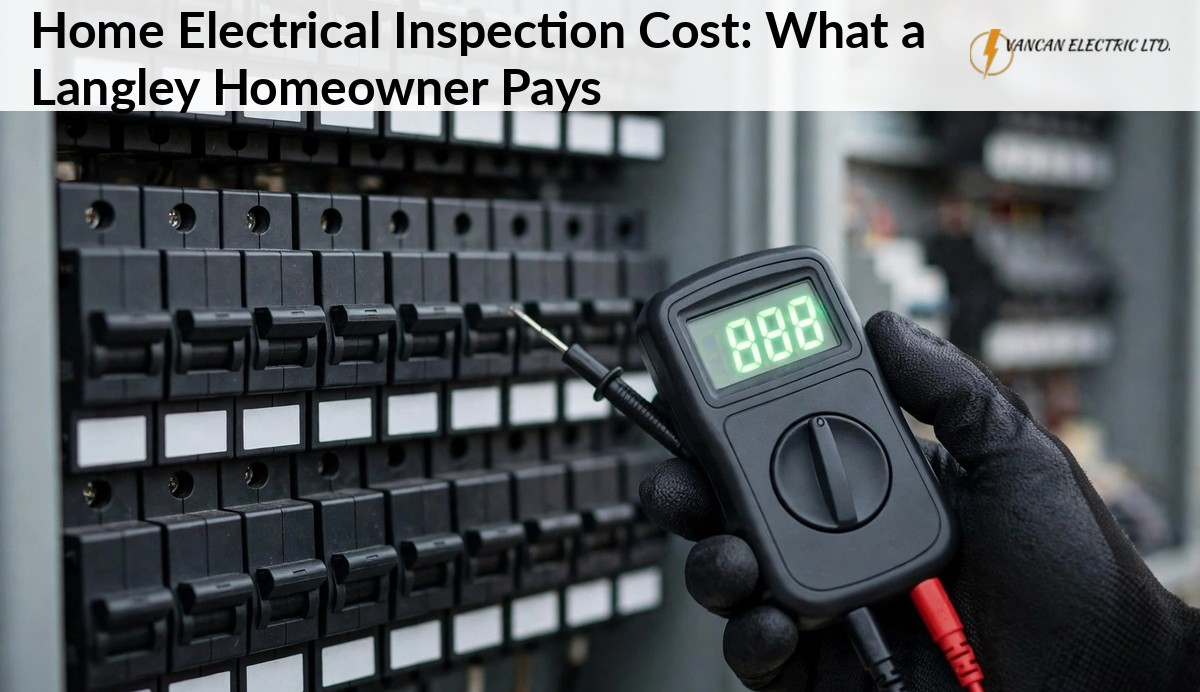
Home Electrical Inspection Cost: What a Langley Homeowner Pays
What does a home electrical inspection cost in Langley? There is no single price. What you pay for a home electrical inspection in Langley rises with the size and age of the house, the panel and the wiring. A small townhouse with a modern 200-amp panel is a short visit. A 1970s home with a 100-amp panel, a subpanel and aluminum or knob-and-tube wiring takes longer. A standalone visit and a pre-purchase visit are priced differently, because the pre-purchase visit adds a focused review before you buy. Ask VanCan Electric for a written quote before you book.
| Inspection | What it covers |
|---|---|
| Annual home electrical inspection | Panel, wiring, grounding, GFCI/AFCI, alarms |
| Pre-purchase electrical inspection | Focused electrical review before you buy |
| Full home inspection (includes electrical) | Whole house: structure, roof, plumbing, electrical, HVAC |
| Re-inspection after repairs | Verifies the fixes and closes the file |
Ranges are a starting point, not a quote. Contact VanCan Electric for your exact price.
What a Home Electrical Inspection Covers
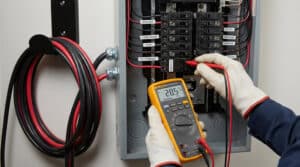
The inspection is a visual and hands-on check of the parts of your electrical system that fail quietly. Use this electrical inspection checklist to see what the visit covers. The electrician opens the panel, tests circuits and outlets, checks the wiring type and the grounding, and confirms your alarms work. Here is what each part of the visit looks like, and what counts as a pass.
The Panel and the Service
The panel is where an inspection starts, because it is where the most consequential problems hide. With the cover off, the electrician checks that each breaker is correctly sized for the wire it feeds, that nothing is double-tapped, and that there are no scorch marks, rust or buzzing. The service size matters too: a 60-amp or 100-amp service feeding an EV charger, a heat pump and a suite is often the first thing flagged.
Wiring: Copper, Aluminum and Knob-and-Tube
The wiring type tells the electrician how old the system is and what the insurer will think of it. Copper is the modern standard. Aluminum branch wiring, common from the mid-1960s to the late 1970s, expands and contracts more than copper and can loosen at connections, a recognized fire concern that is usually managed with listed connectors. Knob-and-tube, found in homes built before 1950, has no ground wire and insulation that grows brittle with age.
Knob-and-Tube and Aluminum: What They Cost to Fix
Replacing knob-and-tube wiring in a BC home typically runs $2,000 to $25,000 or more, depending on the size of the house and how much drywall has to open. Aluminum wiring does not always need a full rewire. Listed copper pigtail connectors at each outlet and switch often bring it up to standard.
Outlets, Switches, GFCI and AFCI Protection
Every accessible outlet and switch gets tested for correct wiring, polarity and grounding. A tester catches reversed polarity (hot and neutral swapped, so a device stays partly energized when it is off) and open grounds that leave three-prong outlets with no real protection. GFCI protection is checked in bathrooms, kitchens, laundry rooms, garages and outdoors. AFCI protection is required for most receptacle circuits in a dwelling unit since the 2015 Canadian Electrical Code, with a few exceptions (kitchen counter receptacles, bathrooms and laundry rooms). It guards against fires from damaged wiring.
Grounding and Bonding
Grounding and bonding are the safety net that gives fault current a fast path back to the source, so a breaker trips instead of leaving metal parts energized. The electrician confirms the system has a proper grounding electrode, that ground and neutral are handled correctly at the main panel and kept separate downstream, and that metal parts such as water pipes and the panel enclosure are bonded.
Smoke and Carbon Monoxide Alarms
The inspection ends with the alarms. Under the BC Building Code, a home needs a smoke alarm on every storey, one in each bedroom, and one in the hallway outside the bedrooms, hardwired and interconnected in homes built or renovated to the current code. Where a home has a fuel-burning appliance or an attached garage, carbon monoxide alarms are required too, and every alarm should be replaced ten years after the date printed on it.
How a Home Electrical Inspection Differs from a General Home Inspection
A general home inspection looks at the house, roof, structure, plumbing, heating and electrical, and the electrical part is a visual review. A home electrical inspection goes deeper: a licensed electrician opens the panel, tests circuits and checks the wiring type. It is that electrical part, done right by the person licensed to do it.
When a General Inspection Is Enough and When It Is Not
For a newer home with a modern panel and copper wiring, a general home inspection usually covers it well enough. For anything older, a 1970s house, a panel with a history, aluminum or knob-and-tube wiring, an inspection by a licensed electrician is the right next step. The general inspector flags what looks wrong; the electrician opens the panel and proves whether it is.
When to Book an Inspection
Most homeowners book at one of four moments: buying a house, renewing insurance, owning an older home, or noticing a warning sign. An electrical inspection for home insurance is usually requested when the house is over 25 years old or has older wiring. An inspection at any of these moments costs less than the problem it finds.
Buying a Home? Book a Pre-Purchase Electrical Inspection
A pre-purchase electrical inspection is the inspection you book before you remove subjects, after the general home inspection, or instead of it when the electrical system is the worry. An inspection at this stage tells you whether the panel, the wiring and the service can handle the house you are about to buy, and what it will cost to fix what cannot. Bring the report to your realtor before you waive conditions.
Electrical Inspection for Home Insurance: What Insurers Ask For
Insurers ask for an electrical inspection for home insurance when the house is older, the panel is a known problem brand, or the wiring is aluminum or knob-and-tube. Our guide to old panels and home insurance risk explains how an outdated panel can raise premiums or block a policy altogether. If your insurer asks for a report, book an inspection before renewal. A clean report is often enough to keep your coverage and your rate.
Older Homes and Warning Signs
A house built before 1980 deserves an inspection even if nothing looks wrong, because its wiring, panel and grounding are from a different code era. The same is true for a mobile home inspection, which covers the same checks in an older manufactured home.
- Lights that flicker or dim when an appliance starts.
- A burning smell near an outlet or the panel.
- A breaker that trips again and again.
- Outlets or switch plates that feel warm.
- Scorch marks, buzzing or a panel that hums.
- Two-prong outlets with no ground.
- A fuse panel, or a panel brand your insurer has flagged.
How often you book an inspection depends on the age of the house and the wiring inside it.
| Home | How often | Why |
|---|---|---|
| Under 10 years old | Every 5 years | New wiring and a modern panel, a routine check is enough |
| 10 to 25 years old | Every 3 to 5 years | Connections age and the code moves on |
| Over 25 years, or older wiring | Every 3 years | Aluminum, knob-and-tube or a 60-amp service needs watching |
| Buying, selling or insurer asks | At the event | The report decides the deal or the policy |
What Happens on Inspection Day
A home electrical inspection usually takes one to two hours for a standard detached house, and you should be home for it. The electrical inspection checklist above is what the electrician works through, room by room. The electrician starts at the panel, works through the rooms, and finishes with the alarms and the outdoor service. You get a written report the same day or the next, a list you can act on.
Before the Visit: Clear the Way
- Clear access to the panel, with a metre of space in front.
- A short list of anything you have noticed: flickers, trips, smells.
- Any old inspection report or permit for past electrical work.
- Access to every room, the attic hatch and the crawl space.
- Be home for the inspection, so you can ask questions.
The Walkthrough: Panel, Rooms, Alarms
The electrician opens the panel, checks each breaker and the service size, tests a sample of outlets and switches in every room for polarity, grounding and GFCI function. The wiring type is noted at the panel and at any open junction box. Alarms are tested last, and the service mast, meter base and outdoor outlets are checked before the report is written.
The Report: What You Get
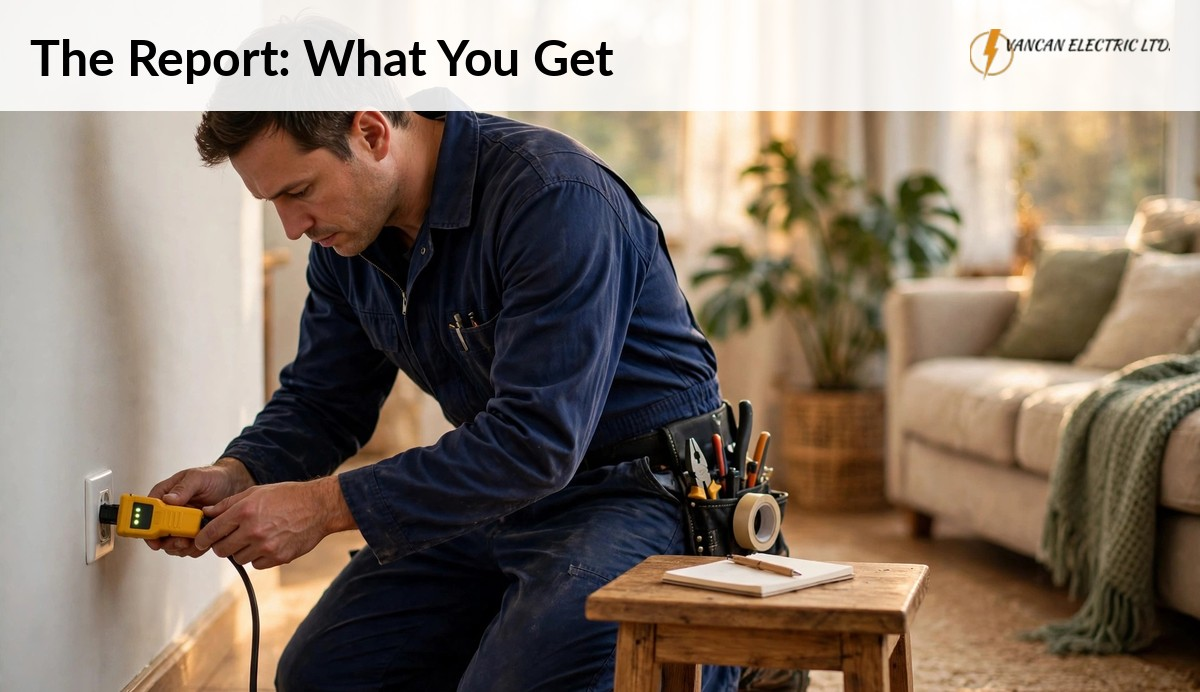
The report grades every finding: safe, watch, or fix now. It names the panel size and type, the wiring type, every failed test and every missing protection. A good report says what each fix involves and what it will roughly cost, so you can get quotes on that scope.
Permits and the Rules in Langley
An inspection needs no permit. It is a look, not work. What the report finds often does need one. In Langley, electrical permits come from Technical Safety BC, not the Township or the City: the Township handles building permits, while electrical work is reviewed by Technical Safety BC, and their inspection closes the permit.
What Needs a Permit After the Report
Almost anything beyond a like-for-like replacement needs a permit: a new circuit, a panel or service change, a rewire, or work in common property. A contractor-pulled permit for a service upgrade is $332 under Technical Safety BC’s 2026 contractor fee schedule, and the fee is usually folded into the quote. The permit is what makes the fix official. Without it, the work has no inspection record.
Homeowner Permits and the 180-Day Rule
BC lets homeowners pull their own electrical permit, but only for their own detached home, and only if they can show they know how to do the work safely. The work must be inspected, and the homeowner has to request the inspection within 180 days of the permit being issued. For most homeowners the simpler path is a licensed contractor, who pulls the permit and books the inspection. See the Technical Safety BC homeowner electrical permits page for the rules.
After the Report: What to Fix First
Not everything in a report is urgent, and a good electrician will say so. The report usually sorts its findings into three piles: fix now, fix soon, and watch. Fix now means a safety risk: a scorched breaker, a missing ground, an overloaded panel. Fix soon means a code gap with no immediate danger; watch means it works, but its age is showing.
Fix Now: Safety Risks
Anything that can shock someone or start a fire goes first: a breaker that does not trip, a scorch mark inside the panel, a bootleg ground, or an outlet that sparks. These are usually same-week jobs, and some need the power off until they are done. If the report lists a Federal Pioneer Stab-Lok panel, a brand some insurers flag, a panel replacement is the fix, and it typically runs $1,500 to $4,500.
Fix Soon: Code Gaps and Upgrades
A missing GFCI in a bathroom, an ungrounded three-prong outlet, or a 100-amp panel in a house that now needs more power are fix-soon items, not emergencies, but real gaps. Our guide to common problems with outdated panels explains what an older panel can and cannot carry. A 100-amp to 200-amp service upgrade is the only safe way to add a large new load, and it costs more than a panel swap alone: it adds a meter base plus BC Hydro coordination on top of a new panel.

Conclusion
A home electrical inspection is the cheapest way to learn what your wiring is doing. It takes an hour or two, costs less than most repairs, and leaves you with a written list instead of a guess. Book an inspection before you buy, before you renew, or the first time something in the house makes you uneasy.
Get the inspection done by a licensed electrician, keep the report with your house records, and fix the safety items first. An inspection in Langley is a small job that prevents a large one.Contact VanCan Electric for a free quote.
Frequently Asked Questions
Quick answers to the questions Langley homeowners ask us most.
About the Author
Majid Akhbari is the owner and lead electrician at VanCan Electric in Langley, BC. He is a Red Seal Construction Electrician, recognized by SkilledTradesBC, and a Class B Field Safety Representative with Technical Safety BC. His team helps homeowners across Langley, Surrey, Vancouver, Abbotsford and nearby cities keep their electrical systems safe.
Sources
- Technical Safety BC, Homeowner Electrical Permit
- The Smoke Alarm Doctor, BC Smoke Alarm Laws 2026: What the Code Actually Requires
- BC Electrical Code (Canadian Electrical Code, Part I, CSA C22.1, as adopted in British Columbia).