

By Majid Akhbari, Red Seal Construction Electrician and Class B FSR | Vancan Electric, Langley, BC | Updated November 2026
Surrey is adding electric vehicles fast, and the charger on the wall is only half the job. The other half is the permit, the panel and the rebate, and that is where most guides get Surrey wrong: the City of Surrey, not Technical Safety BC, issues the electrical permit. This guide explains the EV charger permit in Surrey process, what the job should cost in Surrey in 2026, and what a proper installation includes.
The EV charger permit Surrey homeowners need comes from the City of Surrey, not Technical Safety BC, and the City’s inspector closes it. A licensed contractor pulls the permit, does the load calculation the City requires, installs a charger from BC Hydro’s eligible list, and leaves you the paperwork for your rebate. Below, we explain the permit steps, the rebate, the strata rules, and what a Level 2 install costs in Surrey in 2026.
We explain how to compare quotes below. The permit fee and inspection should be on every quote, line by line.
Permits and Inspections in Surrey
A Level 2 install in Surrey that adds a new 240-volt circuit needs an electrical permit in Surrey, and the work must be inspected before it is energized. The EV charger permit in Surrey process starts with a load calculation, and your contractor should pull the permit before work starts. Our BC permits and rebates guide walks through the BC-wide process.
Who Issues the Permit in Surrey
Surrey is one of eight municipalities that issue their own electrical permits. A Surrey electrical permit comes from the City, and the City’s own inspector closes it. Technical Safety BC handles gas in Surrey, not electrical. Your EV charger permit in Surrey application goes through the City’s permitting portal, and it must include the load calculation. The City requires its Demand Load Calculation form before a new charging circuit is approved. See the City of Surrey EV charger requirements.
A Level 2 install in Surrey follows the same steps every time: site visit, load calculation, permit, install, inspection. Your permit application goes in before the work starts, and the City’s inspector closes it when the install is done.
Step 1: Site Visit and Load Calculation
The contractor visits your home, checks the panel, measures the cable run to the garage or driveway, and runs a load calculation for the service’s spare capacity. This Surrey EV charger load calculation decides whether the job is straightforward, needs a load manager or a panel upgrade.
Step 2: Install Day
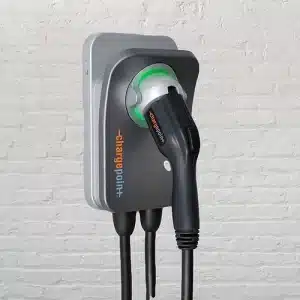
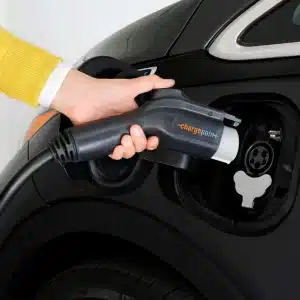
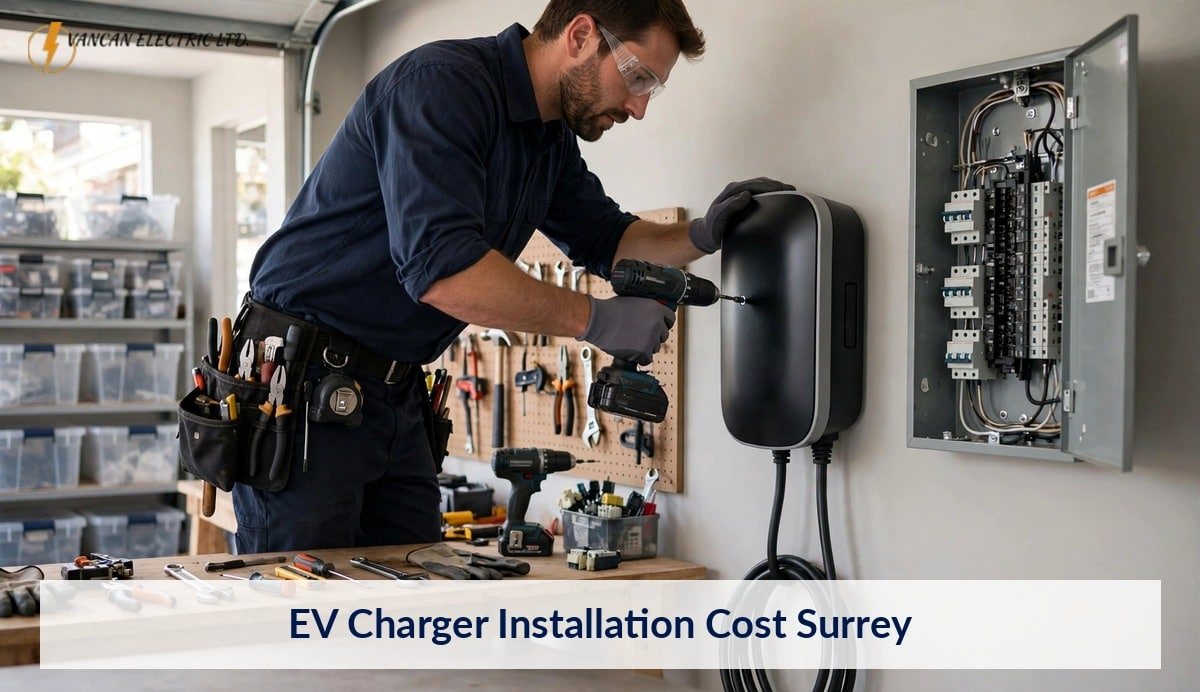
On install day the electrician mounts the charger, runs a dedicated 240-volt circuit from the panel, fits the breaker and disconnect, and tests the charger with your car. A neat install keeps the cable run short and hidden, labels the new breaker, and leaves the wall and driveway clean.
Step 3: Inspection and Paperwork
After the install, a City of Surrey inspector checks the work and closes the permit. Your contractor should give you the inspection record, charger manual, warranty papers and invoice. Keep the permit number with your house records. A future buyer or insurer will ask for it.
Homeowner Permits and the 180-Day Rule
Surrey runs its own homeowner permit, separate from Technical Safety BC. A homeowner electrical permit in Surrey is for a detached home only. A homeowner can apply for a City of Surrey Homeowner Electrical Installation Permit by email to electrical@surrey.ca, but only for their detached home and only if they pass the City’s eligibility checklist. If the job includes an EV charger, the application must include the City’s Demand Load Calculation form. The City’s permit runs 180 days from issue, plus another 180 days after the first inspection. Miss that window and it expires. That clock is the City’s own. Outside Surrey, Technical Safety BC sets its own 180-day deadline.
EV Charger Installation Cost in Surrey
What should Surrey homeowners budget for a Level 2 install in 2026? A straightforward Level 2 install, 200-amp panel and short cable run, typically lands between $1,000 and $1,800 all-in. A typical job quotes $1,500 to $2,600 once the charger, the circuit, the permit fee and the inspection are included.
For a Level 2 install in Surrey, the charger is the first line. A quality Level 2 unit on BC Hydro’s eligible list runs $500 to $1,500 in 2026. The biggest variable is the panel: a 200-amp panel with spare capacity is a simple job, while a 100-amp panel can add $1,500 to $4,500.
| Scenario | Typical all-in cost | What it includes |
|---|---|---|
| Straightforward (200A panel, short run) | $1,000 – $1,800 | Charger, 40A circuit, permit, inspection |
| Typical (standard run, 40A circuit) | $1,500 – $2,600 | Charger, circuit, permit, inspection, testing |
| With 100A to 200A panel upgrade | Add $1,500 – $4,500 | New panel, service upgrade, permit |
These ranges are VanCan’s own published prices on this site, before the BC Hydro rebate.
VanCan’s current promotion makes the electrical permit free with a Level 2 EV charger installation for a limited time, plus 15% off 200-amp panel upgrades. Under the promo, the permit fee in your quote can be $0. Ask for the current terms.
Ranges are a starting point, not a quote. Contact Vancan Electric for your exact price.
Your Electrical Panel: The Load Calculation Comes First
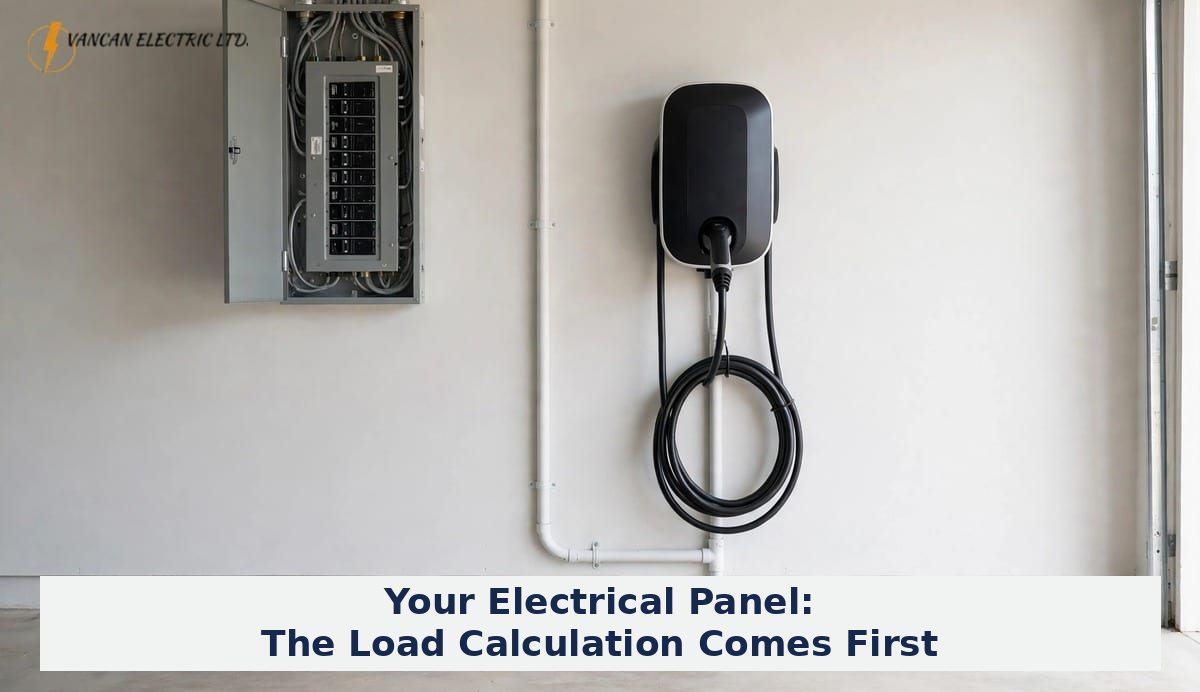
A Level 2 charger adds a large new load to a panel never designed for it. Most chargers run on a 40-amp circuit, but models range from 16 to 48 amps. The load calculation decides the job. A Level 2 install on a 100-amp panel often needs a load manager or a panel upgrade. Your contractor should run the numbers before quoting. The City asks for the load calculation with every EV charger permit in Surrey application.
100-Amp Panel? A Load Manager Can Save the Upgrade
A load manager watches the total draw on your panel and throttles the charger when the dryer or stove runs. It can make a 100-amp panel work without a full upgrade. BC Hydro pays a $200 top-up for an eligible device. Our guide to electrical load calculation in Langley explains the numbers behind that decision.
When the Panel Really Does Need an Upgrade
Some panels cannot be saved by a load manager: a 60-amp service, a fuse panel, or a panel full of tandem breakers. Then a 100-amp to 200-amp service upgrade runs $1,500 to $4,500 in BC, the only safe way to add a charger. Our guide on whether you need a panel upgrade for an EV charger explains when a panel upgrade is needed and when it is not.
BC Hydro Rebates: What a Surrey Homeowner Can Claim
The cost of a Level 2 install in Surrey drops once rebates are counted. BC Hydro pays 50% of buying and installing an eligible Level 2 charger, up to $350, for single-family homes, row homes and duplexes. The EV charger rebate in Surrey changed in 2026: most Surrey homes claim the $350 base plus top-ups, and one neighbourhood can claim far more. Confirm the charger is on BC Hydro’s eligible list before ordering. One that is not earns no rebate. Keep the permit number and inspection record. BC Hydro asks for proof of purchase and installation, and the inspection on your permit application is that proof.
The $1,750 Campbell Heights Top-Up
Campbell Heights is the one Surrey neighbourhood on BC Hydro’s community-offers list, for select postal codes only. A Level 2 charger there earns a $1,750 community top-up on the $350 rebate. In Campbell Heights, the EV charger rebate in Surrey stacks to $2,350: the $350 base, a $1,750 top-up for select postal codes, and the $250 Peak Saver bonus, if the charger is enrolled in Peak Saver, the home sits on a qualifying feeder, and you apply between August 4 and December 31, 2026. The $200 device top-up and the $1,750 neighbourhood top-up do not stack. The neighbourhood top-up covers up to 100% of eligible costs, so the practical cap depends on the actual cost. Check your postal code on the BC Hydro community-based offers page first. Most Surrey postal codes do not qualify. The same list covers White Rock, Abbotsford, Maple Ridge and Mission, same deadline.
The $350 base can grow with top-ups, but not all of them stack. Add the $250 Peak Saver credit and the total reaches $600. Add an eligible EV power management device, a $200 top-up, and the total reaches $800 outside Campbell Heights. In Campbell Heights, the $1,750 neighbourhood top-up replaces the $200 device top-up, so the stack reaches $2,350. See the BC Hydro home charger rebate page for the current list and the application window.
| Rebate | Amount | Who qualifies |
|---|---|---|
| BC Hydro charger rebate (base) | 50% up to $350 | Single-family home, row home or duplex |
| EV power management device | Up to $200 | Eligible device, installed under a permit |
| Peak Saver credit | Up to $250 (+ $50/season) | Smart charger enrolled in Peak Saver |
| Community top-up | Up to $1,750 | Select postal codes only. Campbell Heights in Surrey qualifies |
Apply for the EV charger rebate in Surrey within 180 days of installation, and keep the invoice and permit number. BC Hydro asks for proof of purchase and installation, and pays approved rebates within 90 days. Funding is first come, first served. Apply as soon as the inspection on your permit application passes.
Outdoor and Strata Charging in Surrey
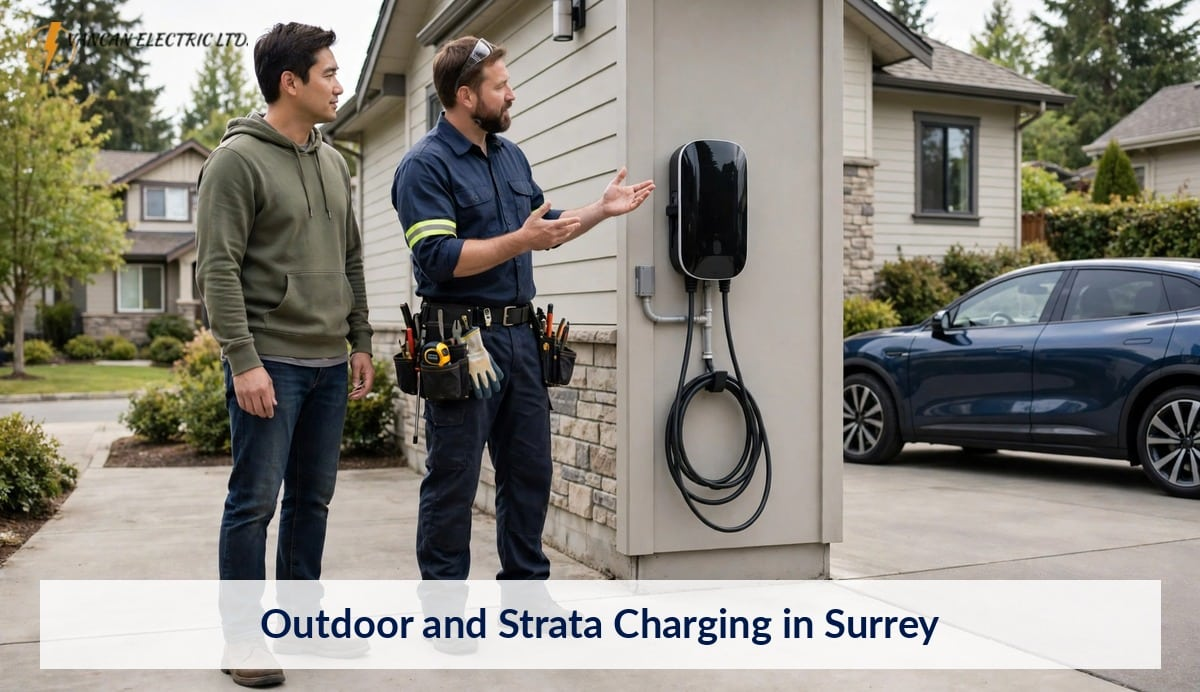
Not every Surrey charger goes in a garage. Driveway and carport installs need a weatherproof charger, a GFCI-protected circuit and a cable route that survives rain and frost. A driveway or strata townhouse install in Surrey needs the same electrical permit and inspection, under the same permit process, and for a strata, written approval first. Your contractor should have done both.
Outdoor Installs: Weatherproof by Design
An outdoor charger needs a NEMA 3R or better enclosure, a cable long enough to reach the car, and a mount high enough to clear standing water. Our outdoor EV charger guide covers weatherproof outdoor charging. The same enclosure ratings apply to any charger mounted outside.
Strata Townhouses: Approval First, Charger Second
A townhouse charger usually runs through common property, so the strata must approve the route, the charger location and who pays. Get approval in writing before you buy the charger. Surrey adds two steps: the City requires a licensed electrical contractor for strata work, and the permit application must include the strata’s pre-approval letter and the City’s Additional Electrical Loads form. A rebate claim also needs a City of Surrey certificate of inspection. Our Surrey townhouse job, a ChargePoint Home Flex with a Blackbox load manager, needed a load calculation, a permit application and strata sign-off first.
For a strata complex, BC Hydro has a separate stream, an EV Ready plan rebate covering 75% of the plan cost, up to $3,000, so the single-family $350 rebate does not apply. Ask your contractor which stream fits your building before you apply.
How to Compare Quotes
Compare quotes on the same assumptions: the charger model, circuit size, permit, inspection and warranty, line by line. Every quote should list the permit fee as its own line, so you can see what the paperwork costs.
What a Good Quote Lists
A good quote names the charger make and model, breaker size, cable length and route, permit fee, inspection and warranty. It states the price before tax and what happens if the panel needs more work than expected. If a quote is a single number with no breakdown, ask for one, or move on.
Red Flags to Watch For in a Quote
- A price far below every other quote, with no permit or inspection.
- No licence number, no FSR name, no insurance proof.
- A charger not on BC Hydro’s eligible list, with no rebate mentioned.
- Full payment demanded before the work starts or the inspection.
The Cheapest Quote Is Rarely the Cheapest Job
A quote that skips the permit saves $100 to $300 today and costs more later: no inspection record, no rebate, and a problem when you sell. A quote that skips the load calculation can end with a tripping breaker or an unbudgeted panel upgrade. The quote that costs more because it includes the permit, the inspection and a listed charger is usually cheapest in the end.
Choosing a Licensed Contractor in Surrey
Searching for a local installer is how most Surrey homeowners start, but the search results do not say who is licensed. The contractor you hire should be a licensed electrical contractor with a Technical Safety BC licence, liability insurance, and a track record of permitted installs in Surrey.
Check the Licence and the FSR
In BC, the work must be done or supervised by a qualified Field Safety Representative working under a licensed electrical contractor. Ask for the contractor licence number and the Class B FSR on the job, then check both on Technical Safety BC’s website. If a contractor cannot give you either, that is your answer.
Warranty, Insurance and Aftercare
A proper install carries two warranties: the manufacturer’s warranty and the contractor’s workmanship warranty. Ask for the workmanship warranty in writing, with its term and what it covers stated, and for proof of liability insurance and WorkSafeBC coverage before anyone touches your panel. Ask who answers the phone if the charger throws an error code in six months.
Check each of these before you sign:
- Contractor licence number and Class B FSR, checked on Technical Safety BC’s website.
- Written quote listing the charger model, circuit size, permit and inspection.
- Proof of liability insurance and WorkSafeBC coverage.
- Workmanship warranty in writing, with its term and coverage stated.
- Rebate check: the charger is on BC Hydro’s eligible list.
Conclusion
A Surrey EV charger job you can trust starts with a licensed contractor who does the load calculation, files the EV charger permit in Surrey application, installs a charger from the rebate list, and leaves the inspection record. The cheapest quote is rarely the cheapest job, and the permit is not paperwork. It is the proof the work is safe. Our licensed electricians in Surrey cover the whole city.
Get three quotes, check the licence and FSR before you sign, and confirm the charger is on BC Hydro’s eligible list. A permit-first job is one whose quote, permit and inspection all line up. Call (778) 745-2873 for a free quote, or read what local homeowners say about our licensed electricians in Langley on Google.
Frequently Asked Questions
Quick answers to the questions Surrey homeowners ask us most.
About the Author
Majid Akhbari is the owner and lead electrician at Vancan Electric in Langley, BC. He is a Red Seal Construction Electrician, recognized by SkilledTradesBC, and a Class B Field Safety Representative with Technical Safety BC. He helps homeowners across Langley, Surrey, Vancouver and Abbotsford with EV charger installs.
Sources
- BC Hydro, Electric vehicle charger rebate program for single-family homes
- BC Hydro, Community-based offers and incentives
- BC Hydro, Charger rebate top-ups
- BC Hydro, How to install an EV charger at home
- City of Surrey, Electric Vehicle Charger Installation Requirements
- City of Surrey, Homeowner Electrical Installation Permits
- Technical Safety BC, Homeowner Electrical Permit
- Government of BC, Safety Standards Act (delegated municipalities)
- BC Electrical Code (Canadian Electrical Code, Part I, CSA C22.1, as adopted in British Columbia).